ACO Reimbursement and Gain Sharing

Accountable Care Organization Reimbursement and Gain Sharing includes the agreed-upon approach to paying the ACO and its participating providers for health care services rendered and bearing risk as well as the approach to allocating revenues and bottom-line gains to participating stakeholders.

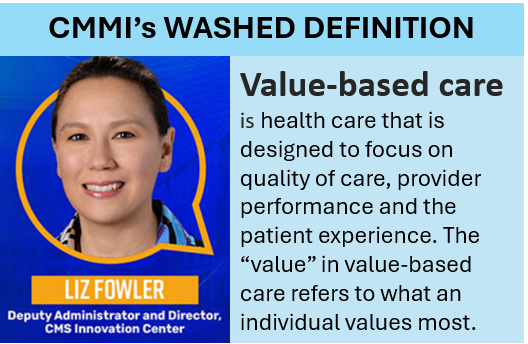
CMS Innovation Center engages in linguistic manipulation and health economics denialism in new definition of “VBC”

There are many good people at the CMS Innovation Center (CMMI). They mean well. They are our friends. But friends need to call out friends when they are out of line. I received an email this morning from CMS announcing the launch of their new “Value-Based Care Spotlight” website. Right near the top of the
CMS Innovation Center engages in linguistic manipulation and health economics denialism in new definition of “VBC” Read More »

Oncology Care Model failure calls for rethinking our approach to real, sustainable improvement in specialty care

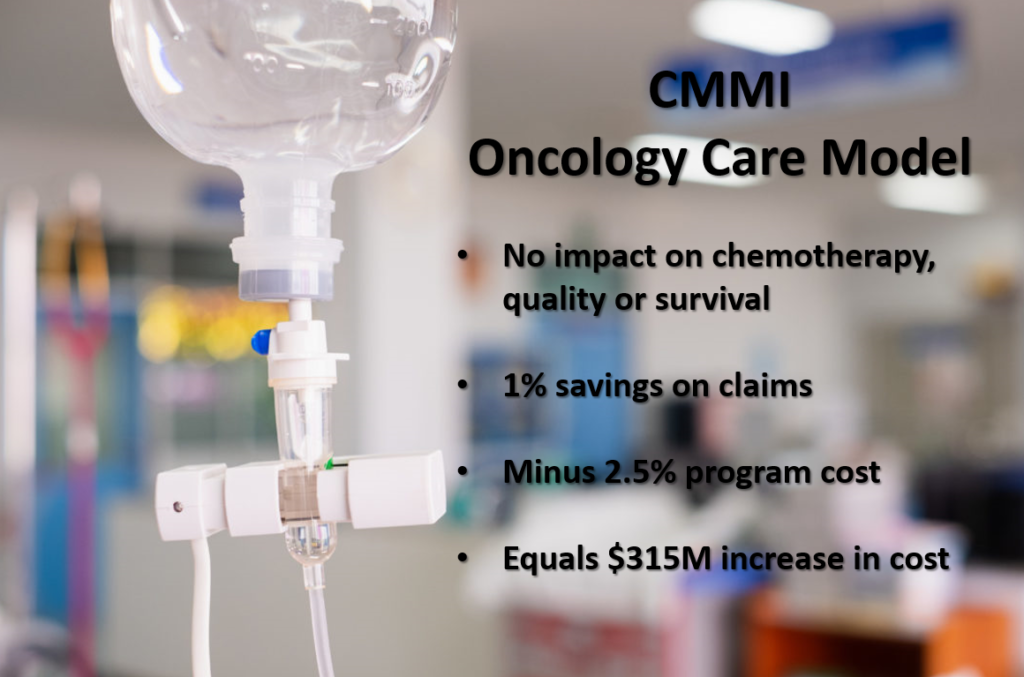
This month, disappointing evaluation results call for re-thinking of our approach to improving specialty care.  Nancy Keating and 12 of her colleagues from multiple medical schools and consultancies working with the CMS Center for Medicare and Medicaid Innovation (CMMI) published the results of their formal evaluation of the Oncology Care Model (OCM), a three-year large-scale

Oncology Care Model failure calls for rethinking our approach to real, sustainable improvement in specialty care Read More »

Berwick and Gilfillan offer six recommendations for reinventing CMMI. My response is yes, but they don’t address the #1 issue: failure to achieve critical mass.

In a recent health policy viewpoint article in JAMA, Drs. Don Berwick and Rick Gilfillan noted that, although the CMS Center for Medicare and Medicaid Innovation (CMMI) has done some good during its ten+ years of existence, it has failed to “become the engine that it could be for transforming the nation’s health care finance

Berwick and Gilfillan offer six recommendations for reinventing CMMI. My response is yes, but they don’t address the #1 issue: failure to achieve critical mass. Read More »

Hospital Value-based Purchasing program 1% incentive is like homeopathic medicine — too diluted to actually work

In the June 15, 2017 issue of the New England Journal of Medicine, Andrew Ryan and colleagues from the University of Michigan published an evaluation of the Medicare Hospital Value-Based Purchasing Program (HVBP). To summarize, if you offer a 1% incentive, and then dilute it by offering it only for the 40% of hospital patients

Hospital Value-based Purchasing program 1% incentive is like homeopathic medicine — too diluted to actually work Read More »

First take on new CMS Comprehensive Primary Care Plus model

This morning, I read about the recently announced next generation version of the CMS Comprehensive Primary Care model, which will require multi-payer participation and will involve up to 5K practices in 20 regions. Sounds interesting.  I need to study it in more detail.  But based on my initial assessment: I agree with the idea of

First take on new CMS Comprehensive Primary Care Plus model Read More »

New HIT ROI lit review is a methodologic tour de force, but misses the point

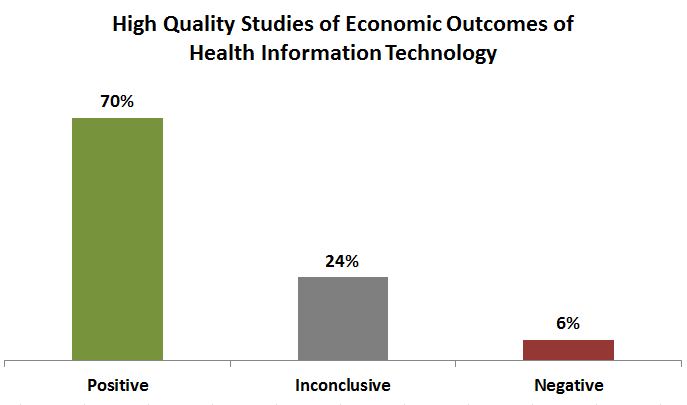
Recently, Jesdeep Bassi and Francis Lau of the University of Victoria (British Columbia) published in the Journal of the American Medical Informatics Association (JAMIA) another in a series of review articles that have been written in recent years to summarize the literature regarding the economic outcomes of investments in health information technology (HIT).  Such articles answer

New HIT ROI lit review is a methodologic tour de force, but misses the point Read More »

Trinity Health and BCBSM sign contract to invest in infrastructure for clinical integration and population management

Trinity Health – Michigan and Blue Cross Blue Shield of Michigan (BCBSM) recently announced that they signed a three and a half year agreement under which BCBSM will provide some funding to support a collaborative effort of Trinity Health and its affiliated physician organizations to make improvements in infrastructure designed to improve clinical integration and support

Trinity Health and BCBSM sign contract to invest in infrastructure for clinical integration and population management Read More »

Is current low trend in health care cost growth due only to recession? Ken Kaufman suggests that 5 other factors may be contributing.

In a very interesting recent post to the Health Affairs blog, Ken Kaufman challenges the widely repeated assertion that the current low level of health care cost growth can be attributed to the recession.  After decades of double digit trend, the rate slowed in recent years down to a mere 3.9% in 2010.  The conventional

Is current low trend in health care cost growth due only to recession? Ken Kaufman suggests that 5 other factors may be contributing. Read More »

Of 27 new ACOs named by CMS: 93% avoid downside risk, 82% avoid CMS loans, 33% use payer-based infrastructure, and average beneficiaries per physician is 106

Yesterday, CMS announced the first batch of 27 “normal” ACOs under its Medicare Shared Savings Program (MSSP). I found five things interesting about the list: 93% were unwilling to accept downside risk.  In the original proposed rule for the MSSP, ACOs would have been forced to accept downside risk.  Presumably, CMS thought that “skin in

Of 27 new ACOs named by CMS: 93% avoid downside risk, 82% avoid CMS loans, 33% use payer-based infrastructure, and average beneficiaries per physician is 106 Read More »