Electronic Medical Records (EMRs)

Electronic Medical Records (EMRs), also including the terms Electronic Health Records (EHR) and Computerized Patient Record (CPR) refer to information systems that are used by health care providers to capture, store, and display health information. Such systems may be confined to one care setting, or extend across settings. Such systems may also includes use for population management and research and may provide access by patients.

U of Michigan study: Epic’s sepsis predictive model has “poor performance” due to low AUC, but reporting AUC is like building a bridge half way over a river. How to finish the job.

The Epic Sepsis Model (ESM) is a widely used proprietary predictive model that was described as having poor performance in a validation paper by Wong et al, citing low area under the ROC curve (AUC). But the evaluation failed to specify the intended protocol in which the ESM was intended to be used, and failed to include estimates of the outcomes of that protocol compared to usual care.

U of Michigan study: Epic’s sepsis predictive model has “poor performance” due to low AUC, but reporting AUC is like building a bridge half way over a river. How to finish the job. Read More »

EMR event log study shows 6 hrs of use per day, but implicitly belittles the clinician’s cognitive effort and the EMR’s support

In a recent paper in the Annals of Family Medicine by Brian Arndt and colleagues at the University of Wisconsin, the authors described the results of an analysis of the user event logs of their Epic EMR.  The authors determined that primary care clinicians used the system nearly 6 hours per day out of an

EMR event log study shows 6 hrs of use per day, but implicitly belittles the clinician’s cognitive effort and the EMR’s support Read More »

In the dust-up about “rebooting” the EHR meaningful use incentive program, “the Emperor has no clothes” has been the most interesting response.

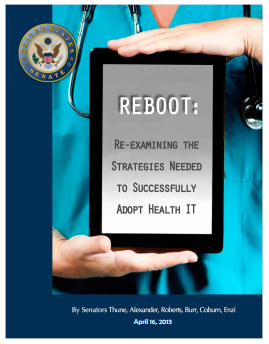
Last month, six Republican senators released a document entitled “Reboot: Reexamining the strategies needed to successfully adopt health IT.” The report asserts that the original goal of the $35 billion EHR meaningful use incentive program was to achieve “interoperability,” creating a “secure network in which hospitals and providers can share patient data nationwide.”  The report expresses concerns

In the dust-up about “rebooting” the EHR meaningful use incentive program, “the Emperor has no clothes” has been the most interesting response. Read More »

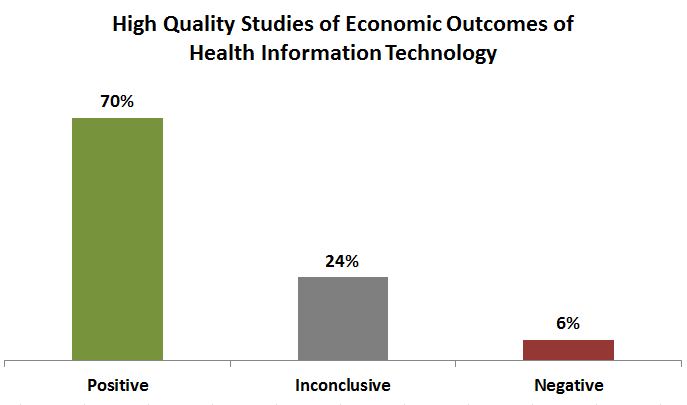
New HIT ROI lit review is a methodologic tour de force, but misses the point

Recently, Jesdeep Bassi and Francis Lau of the University of Victoria (British Columbia) published in the Journal of the American Medical Informatics Association (JAMIA) another in a series of review articles that have been written in recent years to summarize the literature regarding the economic outcomes of investments in health information technology (HIT).  Such articles answer

New HIT ROI lit review is a methodologic tour de force, but misses the point Read More »

Reports of the death of Cost-Effectiveness Analysis in the U.S. may have been exaggerated: The ongoing case of Mammography

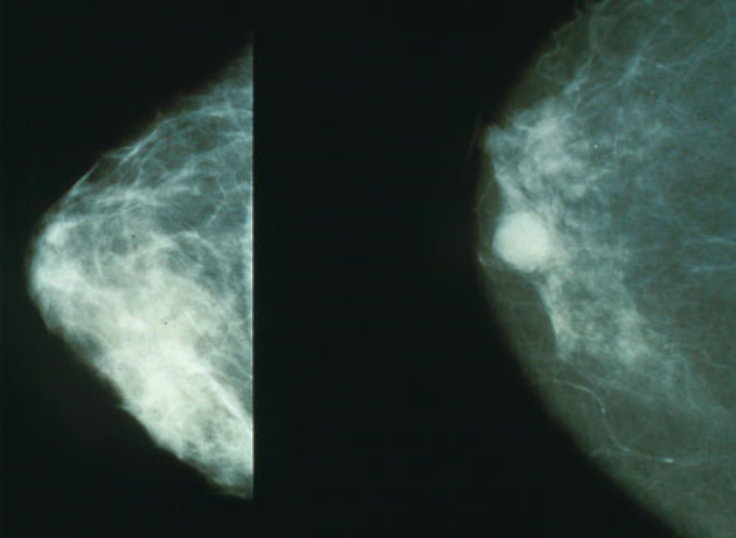
Guidelines for the use of mammograms to screen for breast cancer have been the topic of one of the fiercest and longest-running debates in medicine.  Back in the early 1990s, I participated in that debate as the leader of a guideline development team at the Henry Ford Health System.  We developed one of the earliest

Reports of the death of Cost-Effectiveness Analysis in the U.S. may have been exaggerated: The ongoing case of Mammography Read More »

Google engineering too slow? Facebook too invested in the wrong data model to adapt? Are you kidding me?

Few things in my work life are better than finding mind-blowing information from other industries and figuring out the implications for healthcare. I recently read a set of slides by Paul Adams, a user experience designer that worked at Google and Facebook.  Although Adams’ presentation had 224 slides, the main thesis was relatively simple and

Google engineering too slow? Facebook too invested in the wrong data model to adapt? Are you kidding me? Read More »

Klar 4: Why is it important for CMS to Share Claims Data with ACOs?

Ron Klar, MD, MPH is a health care consultant with a long history of involvement in federal health care policy and health plan innovation. He published a recent series of three posts regarding the draft rules for the Medicare Shared Savings Program (MSSP) in the Health Affairs Blog, an influential forum for debating health policy issues.

Klar 4: Why is it important for CMS to Share Claims Data with ACOs? Read More »

Notes and Thoughts re new ONC leader Farzad Mostashari and Senators Daschle and Bennett at Bipartisan Policy Center

Today I attended a webcast sponsored by the Bipartisan Policy Center, an organization “committed to the art of principled compromise.” The webcast featured Farzad Mostashari, MD, ScM, the newly appointed National Coordinator for Health Information Technology, U.S. Department of Health and Human Services.  He was joined in a panel discussion by Senators Tom Daschle (Democrat, South Dakota) and Bob

Notes and Thoughts re new ONC leader Farzad Mostashari and Senators Daschle and Bennett at Bipartisan Policy Center Read More »

Why many clinical leaders prefer Registries to EHRs: Actively Structured Information

I went to the huge HIMSS’11 convention in Las Vegas a few weeks ago.  When visiting the bewildering number of vendor booths, I focused on a few key questions relevant to the challenges facing physicians and hospitals working to establish successful Accountable Care Organizations (ACOs): 1) What is the current state of clinical data exchange

Why many clinical leaders prefer Registries to EHRs: Actively Structured Information Read More »