ACO Culture

Group meeting in front of complex diagram

Where Group Dynamics meets Analysis and Design: The importance of conceptual clarity and acknowledgement of complexity.

Groups matter When working as a consultant, leader, analyst or designer,  the work requires a mix of individual contributions and group contributions.  Group processes are required to (1) generate ideas, (2) vet ideas, and (3) achieve consensus, which is often a pre-requisite to buy-in and approval of initiatives to improve or build something. Group processes

Where Group Dynamics meets Analysis and Design: The importance of conceptual clarity and acknowledgement of complexity. Read More »

image showing road with many lane markers

Recent nomination of anti-science leaders for HHS and CMS is a wake-up call. We need to defend science by staying in our lane to rebuild trust and objectivity.

The recent nominations of science-disrespecting people to lead HHS and CMS should be a wake-up call. Growing up, I naively believed that antipathy to science was relevant in Galileo’s time, but not modern times. Scientists as people were sometimes treated with disdain — as nerdy, awkward people wearing beanies with propellers, pocket protectors with slide-rules,

Recent nomination of anti-science leaders for HHS and CMS is a wake-up call. We need to defend science by staying in our lane to rebuild trust and objectivity. Read More »

Berwick and Gilfillan offer six recommendations for reinventing CMMI. My response is yes, but they don’t address the #1 issue: failure to achieve critical mass.

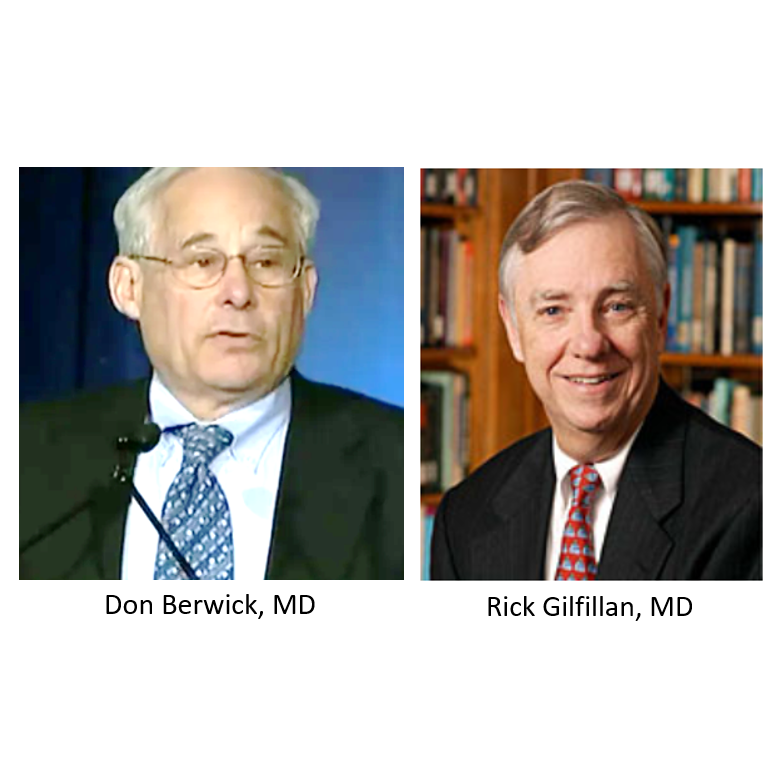
In a recent health policy viewpoint article in JAMA, Drs. Don Berwick and Rick Gilfillan noted that, although the CMS Center for Medicare and Medicaid Innovation (CMMI) has done some good during its ten+ years of existence, it has failed to “become the engine that it could be for transforming the nation’s health care finance

Berwick and Gilfillan offer six recommendations for reinventing CMMI. My response is yes, but they don’t address the #1 issue: failure to achieve critical mass. Read More »

Beautiful video from Cleveland Clinic advocating empathy

We focus on optimizing care processes, analyzing data, implementing technology, and the other technical and scientific aspects of our work to improve health care.  But, this video created by the Cleveland Clinic is a touching reminder of the human element, advocating for empathy in our work. http://www.youtube.com/watch?v=cDDWvj_q-o8&feature=youtu.be

Beautiful video from Cleveland Clinic advocating empathy Read More »

Michigan physicians are more focused on medical homes and accountable care organizations and more optimistic about careers in medicine. Coincidence?

A recent article in Crains Detroit Business reported the results of a national physician survey conducted by The Doctors’ Company, a large malpractice insurer. According to the survey, 10% of physicians nationally report plans to convert their practice to a “medical home” model. But, that number was 27% for Michigan. Nationally, only 14% of physicians

Michigan physicians are more focused on medical homes and accountable care organizations and more optimistic about careers in medicine. Coincidence? Read More »

To resolve conflicts, re-frame polar positions as optimization between undesirable extremes. But, sometimes there is no way to win.

In politics and professional life, achieving success requires the ability to resolve conflicts.  I’ve noticed that conflicts often become entrenched because the opposing parties both simplify the conflict in black and white terms. They conceptualize their own interest as moving in one direction. And, they conceptualize their opponent as wanting to move in the opposite,

To resolve conflicts, re-frame polar positions as optimization between undesirable extremes. But, sometimes there is no way to win. Read More »

Health Care Heroes: Don Berwick, MD – Adapting industrial quality improvement principles to the improvement of health care processes

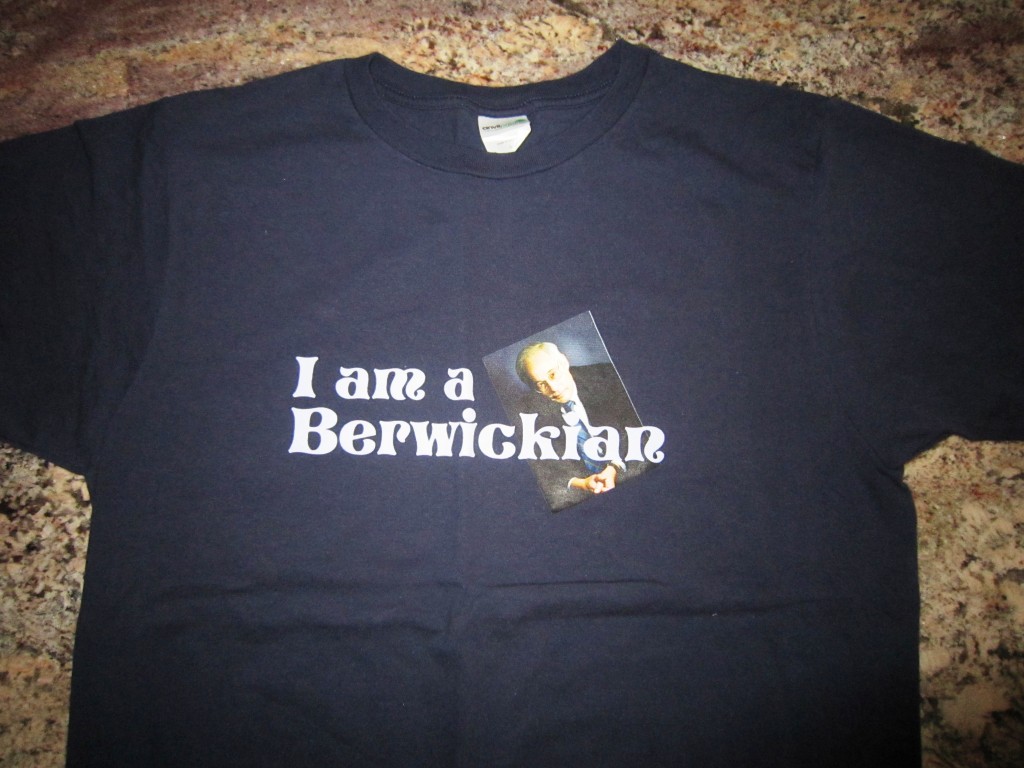
Last week, Don Berwick, MD, announced his resignation as Administrator of the Centers for Medicare and Medicaid Services (CMS).  Now is a good time to explain why Dr. Berwick is one of my all time health care heroes. Apparently, I talk about Dr. Berwick a lot. A few years ago, I received one of my

Health Care Heroes: Don Berwick, MD – Adapting industrial quality improvement principles to the improvement of health care processes Read More »

Primary care physicians acknowledge over-utilization and blame it on the lawyers.

Catching up on some reading, I came across this article in Medical News Today, describing the results of survey research conducted by Brenda E. Sirovich, MD, MS, and colleagues from the VA Outcomes Group (White River Junction, Vermont), and the Dartmouth Institute for Health Policy and Clinical Practice.   They surveyed primary care physicians and

Primary care physicians acknowledge over-utilization and blame it on the lawyers. Read More »

How do we reduce errors in software and data analysis? Culture of Accountability vs. Culture of Learning

A young colleague recently wrote to me complaining of frustration from having to deal with a high rate of errors in software development and data analysis.  Any time you are innovating in a knowledge-intensive field such as health care, you will need to develop new software and analyze data in new ways.  Errors will inevitably

How do we reduce errors in software and data analysis? Culture of Accountability vs. Culture of Learning Read More »

What can we learn from the managed care backlash of the 1990s? Can we avoid an ACO backlash?

Advocates of “accountable care organizations” (ACOs) are careful to avoid the terminology of “managed care,” which is widely viewed as a failed model from the 1980s and 1990s.  But, there are obvious similarities between ACOs and managed care.  Both involve an organization taking responsibility for the quality and cost of care for a defined population.

What can we learn from the managed care backlash of the 1990s? Can we avoid an ACO backlash? Read More »