Evaluation Methods

Evaluation Methods include methods for measuring and comparing the relevant outputs of one or more care processes or care providers to identify best practices, support equitable allocation of incentive resources, or support future decisions about network affiliation or referrals. These methods are borrowed and adapted from other fields, including epidemiology, biostatistics, econometrics and other social and physical sciences.

Trump/Musk killed AHRQ, but in a sense, the death has been playing out over 25 years. Recalling 4 eras of the agency and my dream for its eventual rebirth.

Slashing and Dissolving As reported by the Kaiser Family Foundation’s Health News site blog, last week the Trump administration “dissolved” the Agency for Healthcare Research and Quality (AHRQ), the agency that has for decades been at the center of the US Federal Government’s support for health services research in the service of improvement of our

Trump/Musk killed AHRQ, but in a sense, the death has been playing out over 25 years. Recalling 4 eras of the agency and my dream for its eventual rebirth. Read More »

Graph 2018 Total Low Value Services in MA compared to Traditional Medicare by Plan

Anthem and other Blue MA Plans are worse than traditional Medicare in use of Low Value Services

In the November 1, 2024 issue of JAMA, Ciara Duggan and others from Harvard and Brigham published a paper evaluating the utilization of “low value services” across major Medicare Advantage insurers and Traditional Medicare. Low value services utilization was defined based on the Choosing Wisely campaign and the US Preventive Task Force, and incorporated in

Anthem and other Blue MA Plans are worse than traditional Medicare in use of Low Value Services Read More »

Picture of studying for a test

Physicians want fewer quality measures, but more might be better if it motivates core process improvement rather than “studying for the test”

A JAMA study reports that PCPs are contractually held accountable for 57 unique quality metrics and asserts that is “oversaturation.” I have disagreed with the premise that we need fewer measures. On the contrary, I believe that we actually need a lot more measures to finally convince health care provider organizations to stop trying to “study for the test” and to actually learn the subject and improve the core processes that drive health care quality.

Physicians want fewer quality measures, but more might be better if it motivates core process improvement rather than “studying for the test” Read More »

The squeezing-the-balloon fallacy: Why savings from site-of-care shifts are wildly overestimated

The seemingly straightforward “grocery store” approach to calculating savings from health plans’ site of care shifting initiatives fails to account for fixed costs, a type of “squeeze the balloon” fallacy that leads to wildly exaggerated savings.

The squeezing-the-balloon fallacy: Why savings from site-of-care shifts are wildly overestimated Read More »

Healthgrades page shown on iPad

What should we do when there is a clash between two noble goals: consumer transparency and quality improvement? Five proposed principles.

For many years, I’ve been following and writing blog posts about one of my heroes, Don Berwick, a physician leader, Obama-era CMS Administrator and one of most eloquent, persistent and effective advocates for quality improvement in health care. In a recent viewpoint article in JAMA, Dr. Berwick and two physician co-authors, Thom Meyer (from Duke)

What should we do when there is a clash between two noble goals: consumer transparency and quality improvement? Five proposed principles. Read More »

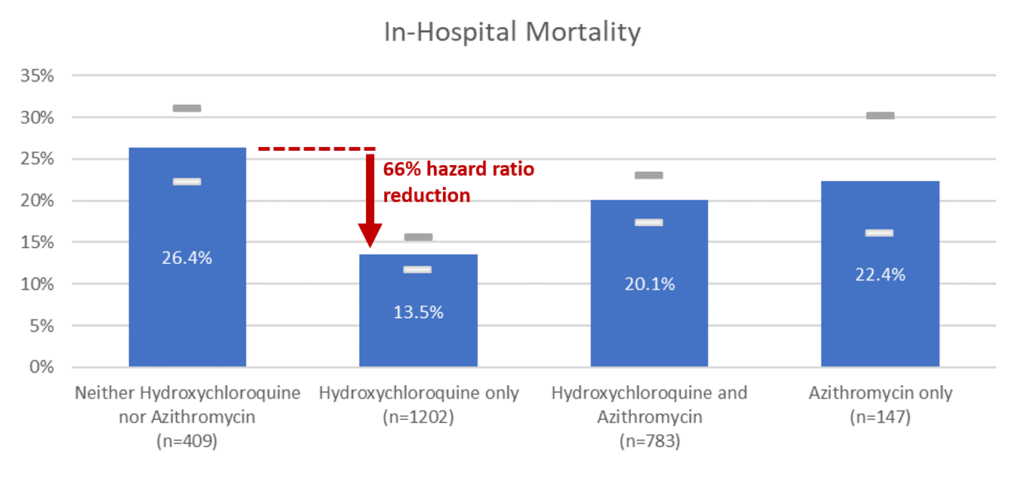
Henry Ford observational study that shows 66% in-hospital mortality reduction from hydroxychloroquine seems to be guilty of “heroic propensity score” problem

During the 1990s, I served as the director of the Center for Clinical Effectiveness at the Henry Ford Health System in Detroit.  I was lucky to have an opportunity to hang around with a really talented group of people there, some of whom are still there.  Back in the day, I was among the loudest

Henry Ford observational study that shows 66% in-hospital mortality reduction from hydroxychloroquine seems to be guilty of “heroic propensity score” problem Read More »

Criticism of ProPublica’s Surgical Scorecard fails to consider the possibility of real, useful analytics.

Last week, ProPublica published a scorecard of surgical death and complication rates of more than 17,000 surgeons  for 8 elective procedures using Medicare data.  As with prior releases of health care performance metrics, the response against such “transparency” was swift and bitter.  Among those many responses is a thoughtful blog post entitled “After Transparency: Morbidity

Criticism of ProPublica’s Surgical Scorecard fails to consider the possibility of real, useful analytics. Read More »

Al Lewis calls workplace wellness programs “get well quick schemes”

Al Lewis is an actuarial consultant that has long focused on challenging wellness and care management vendors to prove their value.  He founded the “Disease Management Purchasing Consortium” and established a training and certification program for “critical outcomes report analysis.” Al has been calling out the methodological carelessness and dirty tricks of wellness and care

Al Lewis calls workplace wellness programs “get well quick schemes” Read More »