Dr. Ward’s Methods Notes

Dr. Ward’s opinions about how to conceptualize and do things, including analysis, system design, project management, development lifecycle, organizational structure, incentives, and more. A work always in progress, never completed.

Health systems need to partner with universities to solve the inadequate supply of analytic talent

This week, I had the privilege of participating as a reviewer of a master’s thesis (“major project”) for a candidate for a master’s degree in economics at the University of Windsor.  The candidate’s project was a decision-analytic model that explored a patient’s decision to seek care and to pursue second opinions and the physician’s decisions

Health systems need to partner with universities to solve the inadequate supply of analytic talent Read More »

Group meeting in front of complex diagram

Where Group Dynamics meets Analysis and Design: The importance of conceptual clarity and acknowledgement of complexity.

Groups matter When working as a consultant, leader, analyst or designer,  the work requires a mix of individual contributions and group contributions.  Group processes are required to (1) generate ideas, (2) vet ideas, and (3) achieve consensus, which is often a pre-requisite to buy-in and approval of initiatives to improve or build something. Group processes

Where Group Dynamics meets Analysis and Design: The importance of conceptual clarity and acknowledgement of complexity. Read More »

The squeezing-the-balloon fallacy: Why savings from site-of-care shifts are wildly overestimated

The seemingly straightforward “grocery store” approach to calculating savings from health plans’ site of care shifting initiatives fails to account for fixed costs, a type of “squeeze the balloon” fallacy that leads to wildly exaggerated savings.

The squeezing-the-balloon fallacy: Why savings from site-of-care shifts are wildly overestimated Read More »

Defensible COVID-19 vaccine prioritization policy will require bravery and explicit principles and analytics. We offer example principles and propose a 6-step process.

For almost a year, the weary public has been receiving a confusing mix of information and misinformation and witnessing an inconsistent and sometimes incoherent policy-making process regarding COVID-19 pandemic response. Leaders, journalists, neighbors, and wanna-be-expert social media influencers have all offered opinions about closing schools and businesses, mandatory mask wearing, testing, quarantine directives and other

Defensible COVID-19 vaccine prioritization policy will require bravery and explicit principles and analytics. We offer example principles and propose a 6-step process. Read More »

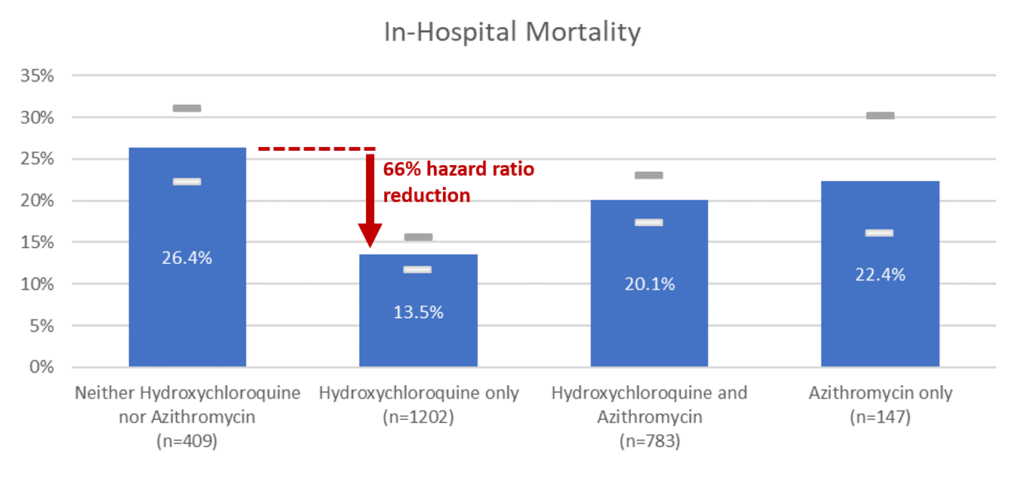
Henry Ford observational study that shows 66% in-hospital mortality reduction from hydroxychloroquine seems to be guilty of “heroic propensity score” problem

During the 1990s, I served as the director of the Center for Clinical Effectiveness at the Henry Ford Health System in Detroit.  I was lucky to have an opportunity to hang around with a really talented group of people there, some of whom are still there.  Back in the day, I was among the loudest

Henry Ford observational study that shows 66% in-hospital mortality reduction from hydroxychloroquine seems to be guilty of “heroic propensity score” problem Read More »

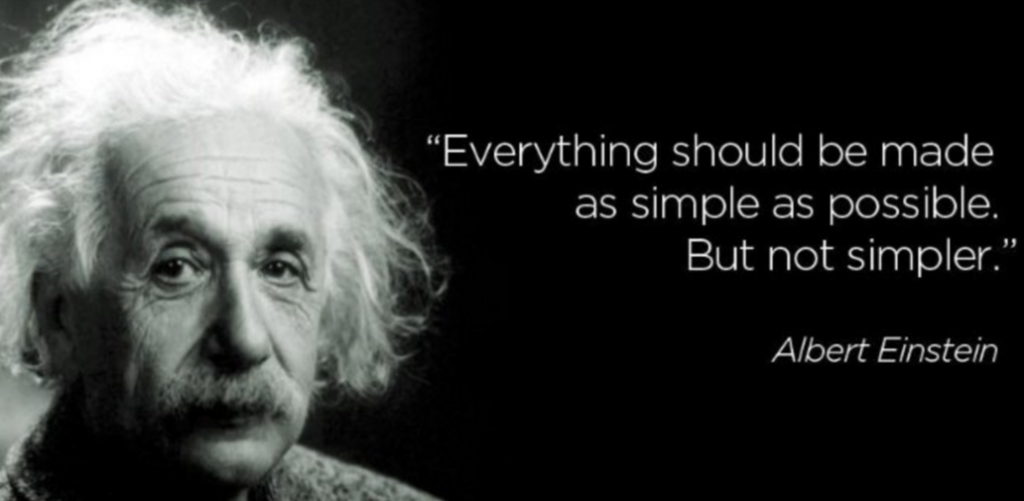
Three ways to keep it simple — one of which is bad

“Keep it simple, stupid.”   The “K.I.S.S.” principle.  Generally a good idea, but not always. Consider three types of simplification: Leaning.  This is about getting rid of waste. When simplifying a design, leaning involves getting rid of unnecessary features.  When simplifying communications, leaning involves getting rid of information that is duplicative, unimportant or just decorative.  Edward

Three ways to keep it simple — one of which is bad Read More »

Conceptualizing “over-treatment” waste: Don’t deny health economics

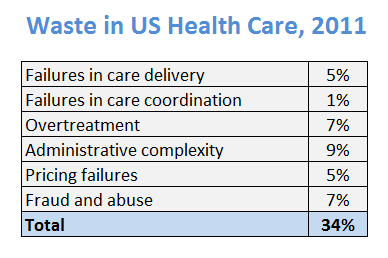
A Health Policy Brief published in Health Affairs on December 13, 2012 referenced an analysis published last April in JAMA regarding waste in health care.  In this analysis, Don Berwick (one of my health care heroes) and Andrew Hackbarth (from RAND) estimated that waste in health care consumed between $476 billion and $992 billion of

Conceptualizing “over-treatment” waste: Don’t deny health economics Read More »

Don’t pave the cow paths: The challenge of re-conceptualizing health care processes

There is a popular adage for information technology professionals: “Don’t pave the cow paths.” I recently worked with a client from Texas, and they were fond of this adage. They said it with the most excellent drawl, giving it extra credibility, as if they may have actually learned it the hard way on their own

Don’t pave the cow paths: The challenge of re-conceptualizing health care processes Read More »

To resolve conflicts, re-frame polar positions as optimization between undesirable extremes. But, sometimes there is no way to win.

In politics and professional life, achieving success requires the ability to resolve conflicts.  I’ve noticed that conflicts often become entrenched because the opposing parties both simplify the conflict in black and white terms. They conceptualize their own interest as moving in one direction. And, they conceptualize their opponent as wanting to move in the opposite,

To resolve conflicts, re-frame polar positions as optimization between undesirable extremes. But, sometimes there is no way to win. Read More »