Decision Analysis

Decision Analysis is a philosophy and method used to formally compare alternatives, generally by creating a single utility metric encompassing all relevant and material outcomes, determining the value of that metric and the probability for each of the possibly scenarios for each alternative, and comparing the probability-weighted utility for each alternative to determine which offers the highest expected utility. The method has been used for decades to support evidence-based practice guidelines.

In response to a JAMA Viewpoint offering 4 principles for public health post COVID, I say yes, but we need a 5th principle – Science staying in its lane.

In a recent issue of JAMA, Daniel Morgan (U Maryland) and Deborah Korenstein (Icahn/Mt. Sinai) offered a viewpoint article that revisits the important evaluative conversation about the performance of our public health system during the COVID-19 pandemic and offers four useful principles for a “new approach to public health.” In this post, I will briefly


In response to a JAMA Viewpoint offering 4 principles for public health post COVID, I say yes, but we need a 5th principle – Science staying in its lane. Read More »

U of Michigan study: Epic’s sepsis predictive model has “poor performance” due to low AUC, but reporting AUC is like building a bridge half way over a river. How to finish the job.

The Epic Sepsis Model (ESM) is a widely used proprietary predictive model that was described as having poor performance in a validation paper by Wong et al, citing low area under the ROC curve (AUC). But the evaluation failed to specify the intended protocol in which the ESM was intended to be used, and failed to include estimates of the outcomes of that protocol compared to usual care.

U of Michigan study: Epic’s sepsis predictive model has “poor performance” due to low AUC, but reporting AUC is like building a bridge half way over a river. How to finish the job. Read More »

To resolve conflicts, re-frame polar positions as optimization between undesirable extremes. But, sometimes there is no way to win.

In politics and professional life, achieving success requires the ability to resolve conflicts.  I’ve noticed that conflicts often become entrenched because the opposing parties both simplify the conflict in black and white terms. They conceptualize their own interest as moving in one direction. And, they conceptualize their opponent as wanting to move in the opposite,

To resolve conflicts, re-frame polar positions as optimization between undesirable extremes. But, sometimes there is no way to win. Read More »

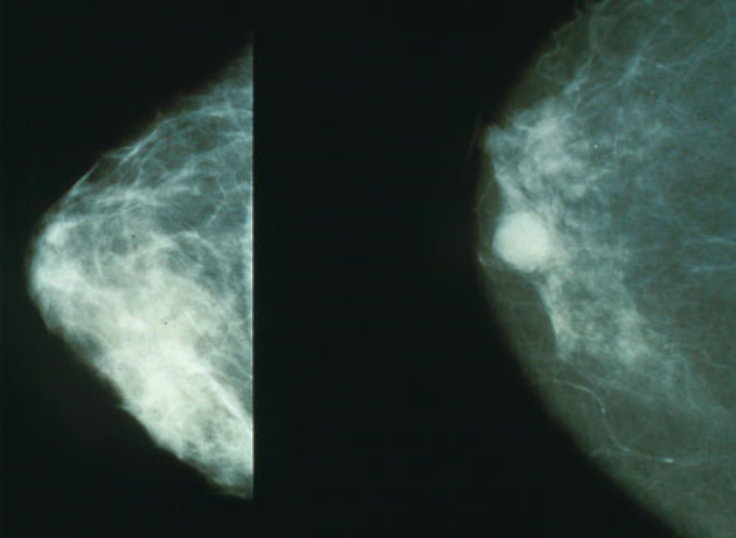
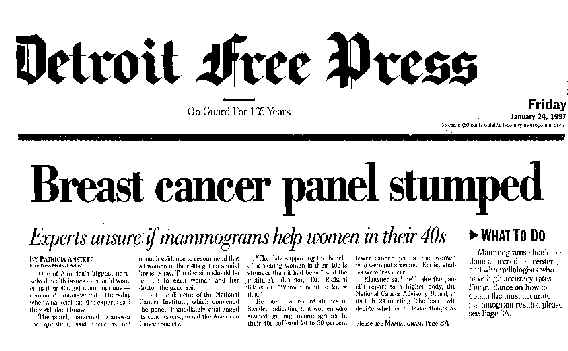
Reports of the death of Cost-Effectiveness Analysis in the U.S. may have been exaggerated: The ongoing case of Mammography

Guidelines for the use of mammograms to screen for breast cancer have been the topic of one of the fiercest and longest-running debates in medicine.  Back in the early 1990s, I participated in that debate as the leader of a guideline development team at the Henry Ford Health System.  We developed one of the earliest

Reports of the death of Cost-Effectiveness Analysis in the U.S. may have been exaggerated: The ongoing case of Mammography Read More »

NEJM report of ACO financial model fails to include risk of delayed start on transformation

On March 23, 2011, Trent Haywood, MD, JD, and Keith Kosel, PhD, MBA published the results in the New England Journal of Medicine (NEJM) web site of a financial model of a hypothetical Accountable Care Organization (ACO).  This model shows that ACOs are likely to lose money on the Medicare Shared Savings Program called for in

NEJM report of ACO financial model fails to include risk of delayed start on transformation Read More »

The Smoking Intervention Program, a Provider-based Care Management Process

Smoking cessation is an important public health concern, and has been the subject of a recent Agency for Health Care Policy and Research (AHCPR) guideline, as well as a HEDIS measure.   A point prevalence study conducted with the Henry Ford Health System found a 27.4% prevalence of smoking, and an additional 38.6% former smokers. The

The Smoking Intervention Program, a Provider-based Care Management Process Read More »

Using Eddy’s Explicit Method to Develop Practice Guidelines for Mammography in the 40-49 Age Group

Note that the following write-up is now almost 20 years old!  (How did that happen?)  Amazingly, the debate about the role and frequency of mammography in the 40-49 age group has raged on the entire time since then.  This case study demonstrates the real-world use of the “explicit method” proposed by one of my “health

Using Eddy’s Explicit Method to Develop Practice Guidelines for Mammography in the 40-49 Age Group Read More »