Modeling Methods

Modeling Methods include diverse methods used to explore and understand the implications of assumptions related to a system, process or decision and to make quantitative estimates of future outcomes under alternative scenarios to support proactive decision-making.

Why do other countries have different attitudes about Health Economics?

Wednesday morning, I attended a thought-provoking panel discussion entitled “Is Health Economics an Un-American Activity?” — a reference to the McCarthy-era Congressional committees that judged Hollywood movie directors and others considered to be communist sympathizers.  The panel presentation was part of the annual meeting of the International Society for Pharmacoeconomics and Outcomes Research (ISPOR) in

Why do other countries have different attitudes about Health Economics? Read More »
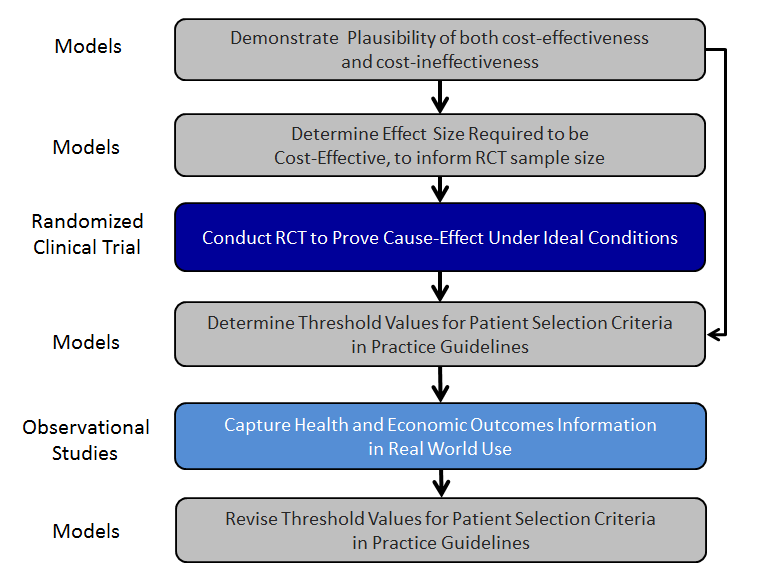
In the battle between Randomized Clinical Trialists and Observational Studies Advocates, don’t forget the Modelers

This week, I’m attending the annual meeting of the International Society for Pharmacoeconomics and Outcomes Research (ISPOR) in Baltimore.  Yesterday evening, I attended an interesting “smack-down” presentation between advocates for Randomized Clinical Trials (RCTs) vs. advocates for Observational Research.  The session was packed with hundreds of people.  In one corner was Michael Lauer, MD, the

In the battle between Randomized Clinical Trialists and Observational Studies Advocates, don’t forget the Modelers Read More »

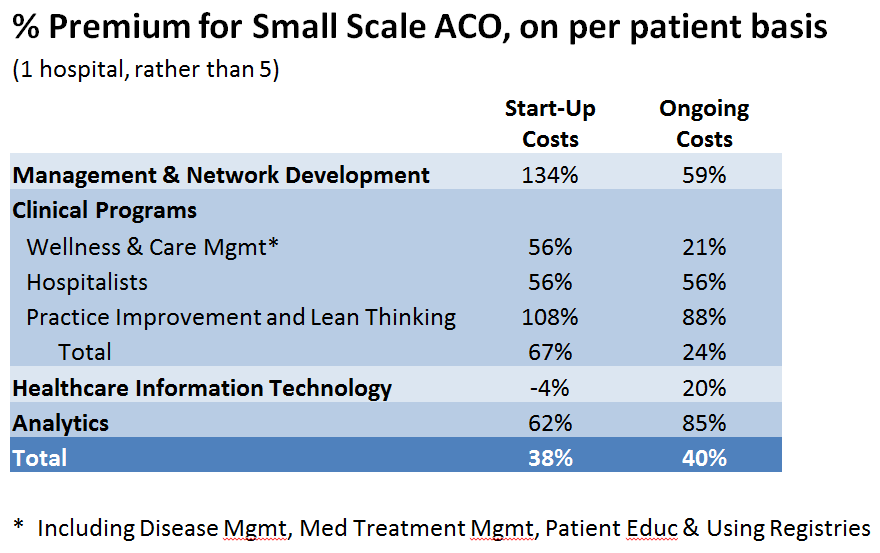
Part 2 of Critique of AHA analysis showing higher ACO-related costs: Is being “local” worth 40% more?

The American Hospital Association (AHA) engaged McManis Consulting to develop a model of ACO-related start-up and ongoing costs for Accountable Care Organizations (ACOs). The recently released analysis was based primarily on information gleaned from studying four case examples of provider organizations of different types and sizes that have already established many of the 23 types of

Part 2 of Critique of AHA analysis showing higher ACO-related costs: Is being “local” worth 40% more? Read More »

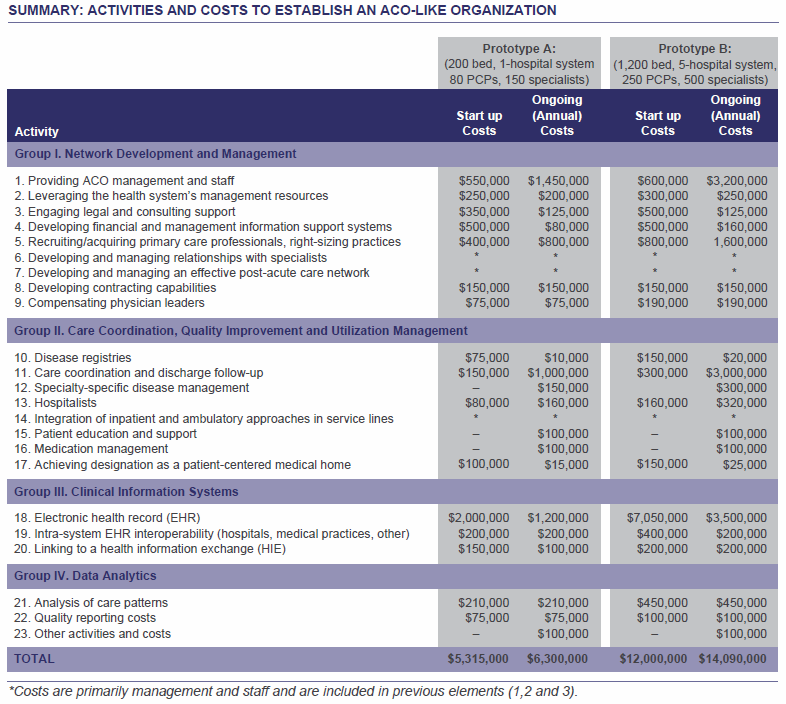
Part 1 of Critique of AHA analysis showing higher ACO-related costs: Still underestimating care management cost

The American Hospital Association (AHA) engaged McManis Consulting to estimate the start-up and ongoing costs for Accountable Care Organizations (ACOs). The recently released analysis was based primarily on information gleaned from studying four case examples of provider organizations of different types and sizes that have already established many of the 23 types of “ACO activities”

Part 1 of Critique of AHA analysis showing higher ACO-related costs: Still underestimating care management cost Read More »

Book with doodles on top

We don’t need more data. We need better story-telling.

— This morning, I read a blog post from someone in the “business intelligence” industry complaining that, after years of innovation, “BI” is not really having the envisioned effects.   The author wondered whether it was because BI, like most other business applications, are not “fun.”  The author suggested that BI applications should consider borrowing

We don’t need more data. We need better story-telling. Read More »

We need to cultivate more analysts that can do both rigorous science and practical decision-making

— Yesterday afternoon, I had the opportunity to have my first mentoring conversation with Wanyu Liu, a talented young undergraduate at the University of Washington.  Wanyu is studying statistics, economics, and applied computational mathematical sciences.  She is thinking about becoming an actuary.  I always learn the most when I am trying to teach others.  Teaching forces one

We need to cultivate more analysts that can do both rigorous science and practical decision-making Read More »

Part 2 of Critique of Milliman’s Whitepaper on Non-Medicare ACOs: Overly optimistic about inpatient use management, alarmingly pessimistic about primary care process transformation

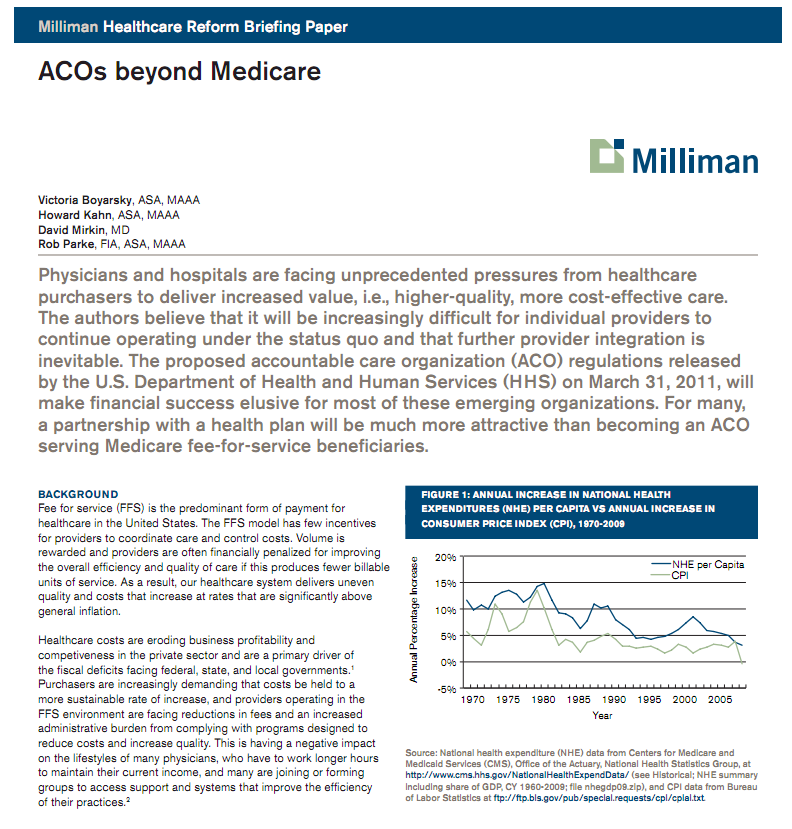
Victoria Boyarsky, Howard Kahn, David Mirkin, and Rob Parke from Milliman recently released a Healthcare Reform Briefing Paper entitled “ACOs beyond Medicare.”  The paper notes the unfavorable reception by providers to the economics of the draft regs for the Medicare Shared Savings Program, and suggests that emerging ACOs focus instead on commercial (non-Medicare) populations.  In

Part 2 of Critique of Milliman’s Whitepaper on Non-Medicare ACOs: Overly optimistic about inpatient use management, alarmingly pessimistic about primary care process transformation Read More »

Part 1 of Critique of Milliman’s Whitepaper on Non-Medicare ACOs: Misinterpreting the Milliman “Well Managed” Actuarial Model?

Victoria Boyarsky, Howard Kahn, David Mirkin, and Rob Parke from Milliman recently released a Healthcare Reform Briefing Paper entitled “ACOs beyond Medicare.” In the paper, the authors argue that the Medicare Shared Savings Program (and the associated regulations regarding the formation of ACOs), as defined in the draft regulations released on March 31, 2011, will

Part 1 of Critique of Milliman’s Whitepaper on Non-Medicare ACOs: Misinterpreting the Milliman “Well Managed” Actuarial Model? Read More »

NEJM report of ACO financial model fails to include risk of delayed start on transformation

On March 23, 2011, Trent Haywood, MD, JD, and Keith Kosel, PhD, MBA published the results in the New England Journal of Medicine (NEJM) web site of a financial model of a hypothetical Accountable Care Organization (ACO).  This model shows that ACOs are likely to lose money on the Medicare Shared Savings Program called for in

NEJM report of ACO financial model fails to include risk of delayed start on transformation Read More »

What are agent-based models and how do they relate to ACOs?

Agent-based Modeling (ABM) is a type of computational simulation that involves the creation, inside a computer’s memory, of a collection of objects that are programmed to mimic the behavior of people, companies, countries or anything else that constitutes the “agents” that interact and change over time as part of a complex system. ABM has been

What are agent-based models and how do they relate to ACOs? Read More »