Modeling Methods

Modeling Methods include diverse methods used to explore and understand the implications of assumptions related to a system, process or decision and to make quantitative estimates of future outcomes under alternative scenarios to support proactive decision-making.

In response to a JAMA Viewpoint offering 4 principles for public health post COVID, I say yes, but we need a 5th principle – Science staying in its lane.

In a recent issue of JAMA, Daniel Morgan (U Maryland) and Deborah Korenstein (Icahn/Mt. Sinai) offered a viewpoint article that revisits the important evaluative conversation about the performance of our public health system during the COVID-19 pandemic and offers four useful principles for a “new approach to public health.” In this post, I will briefly

In response to a JAMA Viewpoint offering 4 principles for public health post COVID, I say yes, but we need a 5th principle – Science staying in its lane. Read More »

Health systems need to partner with universities to solve the inadequate supply of analytic talent

This week, I had the privilege of participating as a reviewer of a master’s thesis (“major project”) for a candidate for a master’s degree in economics at the University of Windsor.  The candidate’s project was a decision-analytic model that explored a patient’s decision to seek care and to pursue second opinions and the physician’s decisions

Health systems need to partner with universities to solve the inadequate supply of analytic talent Read More »

Trump/Musk killed AHRQ, but in a sense, the death has been playing out over 25 years. Recalling 4 eras of the agency and my dream for its eventual rebirth.

Slashing and Dissolving As reported by the Kaiser Family Foundation’s Health News site blog, last week the Trump administration “dissolved” the Agency for Healthcare Research and Quality (AHRQ), the agency that has for decades been at the center of the US Federal Government’s support for health services research in the service of improvement of our

Trump/Musk killed AHRQ, but in a sense, the death has been playing out over 25 years. Recalling 4 eras of the agency and my dream for its eventual rebirth. Read More »

image showing road with many lane markers

Recent nomination of anti-science leaders for HHS and CMS is a wake-up call. We need to defend science by staying in our lane to rebuild trust and objectivity.

The recent nominations of science-disrespecting people to lead HHS and CMS should be a wake-up call. Growing up, I naively believed that antipathy to science was relevant in Galileo’s time, but not modern times. Scientists as people were sometimes treated with disdain — as nerdy, awkward people wearing beanies with propellers, pocket protectors with slide-rules,

Recent nomination of anti-science leaders for HHS and CMS is a wake-up call. We need to defend science by staying in our lane to rebuild trust and objectivity. Read More »

CDC’s new $200M Center for Forecasting and Outbreak Analytics mistakenly frames modeling efforts as “forecasting.” It should be all about policy decision support.

In an excellent article in New York Times Magazine, Jeneen Interlandi reported on her interviews with leaders of CDC’s new $200M Center for Forecasting and Outbreak Analytics (CFA), and provides context regarding the challenges to infectious disease modeling in general. But Ms. Interlandi and the CFA leaders that were interviewed missed a really import point.

CDC’s new $200M Center for Forecasting and Outbreak Analytics mistakenly frames modeling efforts as “forecasting.” It should be all about policy decision support. Read More »

U of Michigan study: Epic’s sepsis predictive model has “poor performance” due to low AUC, but reporting AUC is like building a bridge half way over a river. How to finish the job.

The Epic Sepsis Model (ESM) is a widely used proprietary predictive model that was described as having poor performance in a validation paper by Wong et al, citing low area under the ROC curve (AUC). But the evaluation failed to specify the intended protocol in which the ESM was intended to be used, and failed to include estimates of the outcomes of that protocol compared to usual care.

U of Michigan study: Epic’s sepsis predictive model has “poor performance” due to low AUC, but reporting AUC is like building a bridge half way over a river. How to finish the job. Read More »

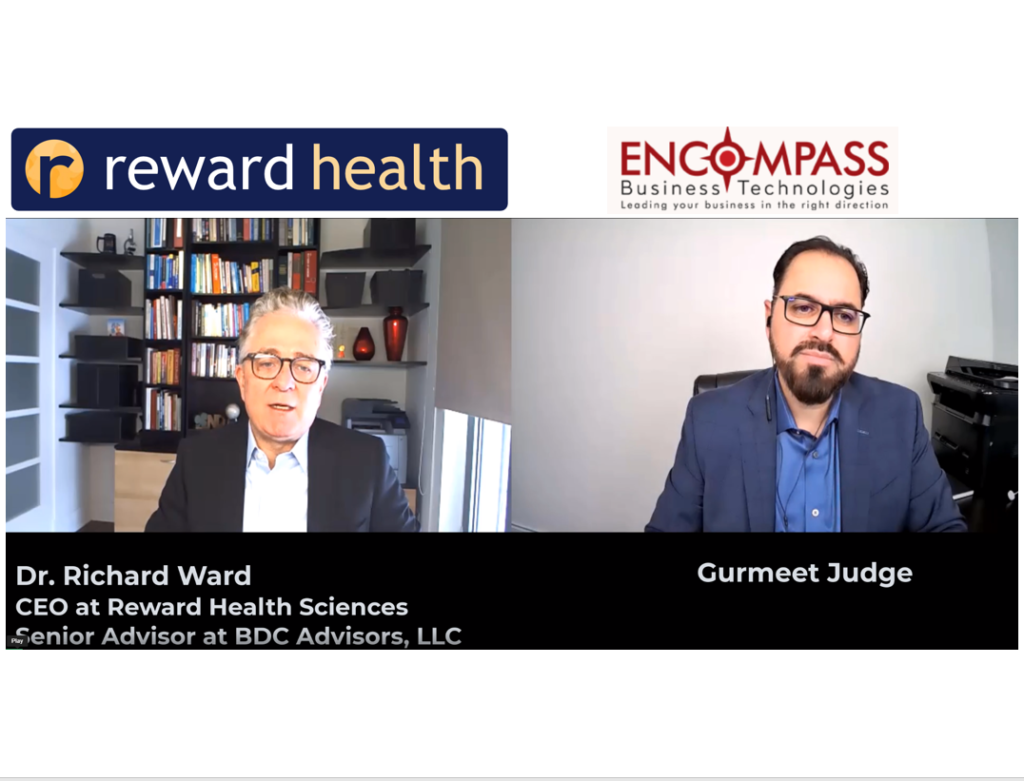
The Post-COVID Wave and advice for business leaders navigating the pandemic and beyond: Dr. Ward interviewed by Gurmeet Judge, CEO of Encompass Business Technologies

Dr. Ward shares insights in an interview conducted by Gurmeet Judge, CEO of Encompass Business Techologies, an IT services company based in Vaughan, Ontario (suburb of Toronto) for the Encompass Blog. The hour long interview covers a wide range of topics of interest to leaders of both health care and non-health care organizations as they navigate through the COVID-19 pandemic and prepare to deal with the post-pandemic world, including the expected post-Covid wave in business and clinical activity, leadership strategies to build trust, talent and agility, and applying pandemic-style simulation analytics to business decisions.

The Post-COVID Wave and advice for business leaders navigating the pandemic and beyond: Dr. Ward interviewed by Gurmeet Judge, CEO of Encompass Business Technologies Read More »

Defensible COVID-19 vaccine prioritization policy will require bravery and explicit principles and analytics. We offer example principles and propose a 6-step process.

For almost a year, the weary public has been receiving a confusing mix of information and misinformation and witnessing an inconsistent and sometimes incoherent policy-making process regarding COVID-19 pandemic response. Leaders, journalists, neighbors, and wanna-be-expert social media influencers have all offered opinions about closing schools and businesses, mandatory mask wearing, testing, quarantine directives and other

Defensible COVID-19 vaccine prioritization policy will require bravery and explicit principles and analytics. We offer example principles and propose a 6-step process. Read More »

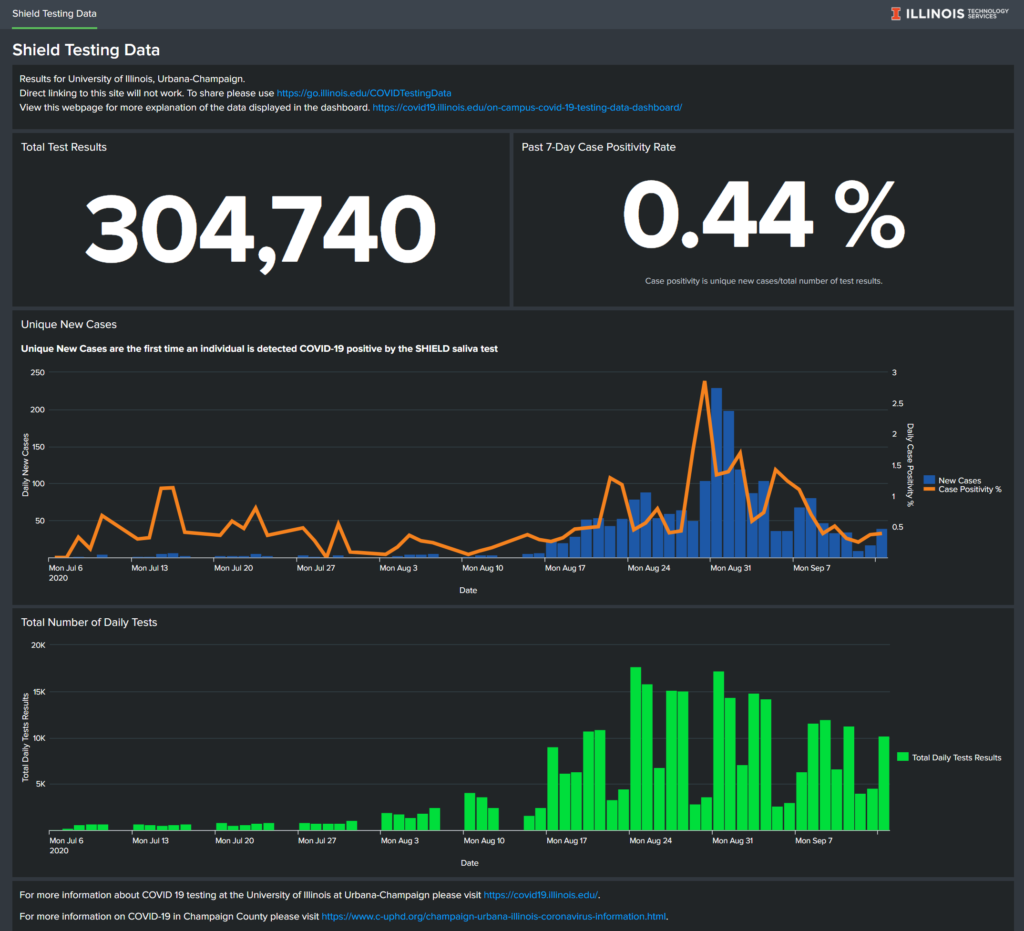
University of Illinois is using campus-level COVID model, mandatory frequent saliva testing, an army of contact tracers and dynamic policy to keep the campus safe

In a recent article in Nature, the COVID19 response for the University of Illinois at Urbana campus was detailed. Although a spike in cases reported at the end of August, 2020 led to some national news coverage suggesting it was a failure, I nevertheless consider it an illustration of good practices that should be emulated

University of Illinois is using campus-level COVID model, mandatory frequent saliva testing, an army of contact tracers and dynamic policy to keep the campus safe Read More »