Accountable Care Organizations (ACOs)

An accountable care organization (ACO) is type of managed care organization in which physicians, hospitals and other providers takes responsibility for the health and wellness of a population of patients, including responsibility for high quality, appropriateness, and efficiency of the care provided.

Group meeting in front of complex diagram

Where Group Dynamics meets Analysis and Design: The importance of conceptual clarity and acknowledgement of complexity.

Groups matter When working as a consultant, leader, analyst or designer,  the work requires a mix of individual contributions and group contributions.  Group processes are required to (1) generate ideas, (2) vet ideas, and (3) achieve consensus, which is often a pre-requisite to buy-in and approval of initiatives to improve or build something. Group processes

Where Group Dynamics meets Analysis and Design: The importance of conceptual clarity and acknowledgement of complexity. Read More »

image showing road with many lane markers

Recent nomination of anti-science leaders for HHS and CMS is a wake-up call. We need to defend science by staying in our lane to rebuild trust and objectivity.

The recent nominations of science-disrespecting people to lead HHS and CMS should be a wake-up call. Growing up, I naively believed that antipathy to science was relevant in Galileo’s time, but not modern times. Scientists as people were sometimes treated with disdain — as nerdy, awkward people wearing beanies with propellers, pocket protectors with slide-rules,

Recent nomination of anti-science leaders for HHS and CMS is a wake-up call. We need to defend science by staying in our lane to rebuild trust and objectivity. Read More »

Graph 2018 Total Low Value Services in MA compared to Traditional Medicare by Plan

Anthem and other Blue MA Plans are worse than traditional Medicare in use of Low Value Services

In the November 1, 2024 issue of JAMA, Ciara Duggan and others from Harvard and Brigham published a paper evaluating the utilization of “low value services” across major Medicare Advantage insurers and Traditional Medicare. Low value services utilization was defined based on the Choosing Wisely campaign and the US Preventive Task Force, and incorporated in

Anthem and other Blue MA Plans are worse than traditional Medicare in use of Low Value Services Read More »

Picture of studying for a test

Physicians want fewer quality measures, but more might be better if it motivates core process improvement rather than “studying for the test”

A JAMA study reports that PCPs are contractually held accountable for 57 unique quality metrics and asserts that is “oversaturation.” I have disagreed with the premise that we need fewer measures. On the contrary, I believe that we actually need a lot more measures to finally convince health care provider organizations to stop trying to “study for the test” and to actually learn the subject and improve the core processes that drive health care quality.

Physicians want fewer quality measures, but more might be better if it motivates core process improvement rather than “studying for the test” Read More »

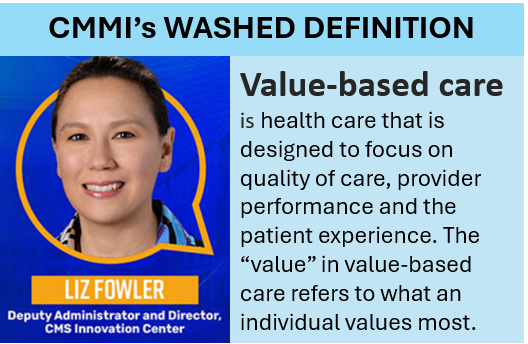
CMS Innovation Center engages in linguistic manipulation and health economics denialism in new definition of “VBC”

There are many good people at the CMS Innovation Center (CMMI). They mean well. They are our friends. But friends need to call out friends when they are out of line. I received an email this morning from CMS announcing the launch of their new “Value-Based Care Spotlight” website. Right near the top of the

CMS Innovation Center engages in linguistic manipulation and health economics denialism in new definition of “VBC” Read More »

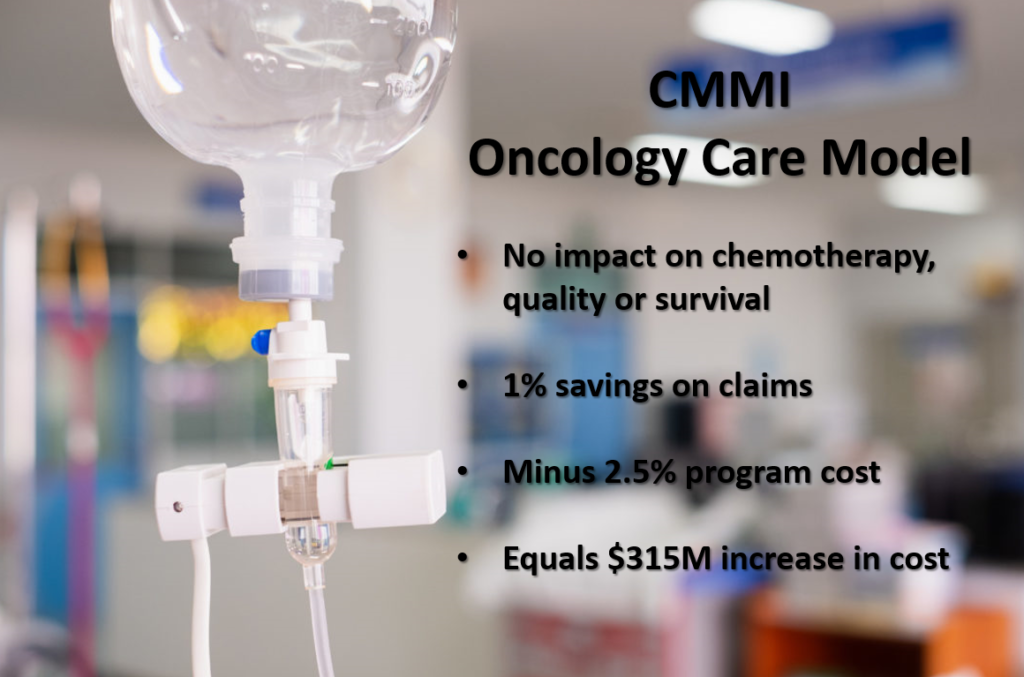
Oncology Care Model failure calls for rethinking our approach to real, sustainable improvement in specialty care

This month, disappointing evaluation results call for re-thinking of our approach to improving specialty care.  Nancy Keating and 12 of her colleagues from multiple medical schools and consultancies working with the CMS Center for Medicare and Medicaid Innovation (CMMI) published the results of their formal evaluation of the Oncology Care Model (OCM), a three-year large-scale

Oncology Care Model failure calls for rethinking our approach to real, sustainable improvement in specialty care Read More »

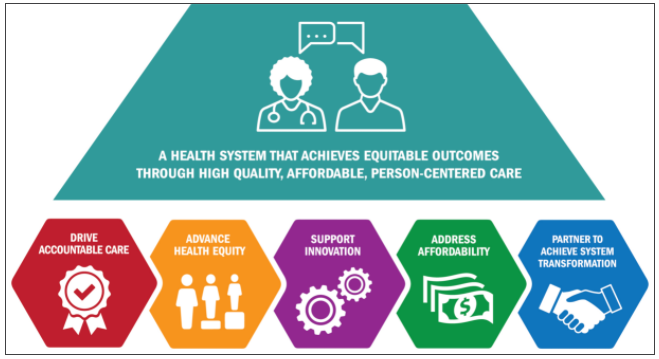
Berwick and Gilfillan offer six recommendations for reinventing CMMI. My response is yes, but they don’t address the #1 issue: failure to achieve critical mass.

In a recent health policy viewpoint article in JAMA, Drs. Don Berwick and Rick Gilfillan noted that, although the CMS Center for Medicare and Medicaid Innovation (CMMI) has done some good during its ten+ years of existence, it has failed to “become the engine that it could be for transforming the nation’s health care finance

Berwick and Gilfillan offer six recommendations for reinventing CMMI. My response is yes, but they don’t address the #1 issue: failure to achieve critical mass. Read More »

If repealing Obamacare is off the table, can we turn attention to improving it through cost-effective clinical protocols?

Paul Krugman recently wrote an article in the New York Times posing the question: if repealing Obamacare is off the table (for now), should people on the “progressive” end of the political spectrum push for a single-payer “Medicare for all” system or just advocate for incremental improvements to the privatized Obamacare model?  He says if

If repealing Obamacare is off the table, can we turn attention to improving it through cost-effective clinical protocols? Read More »