Clinical Process Improvement

Clinical Process Improvement includes efforts to re-design, transform or incrementally improve decision-making and care-delivery processes within and across clinical settings so as to achieve measurable increases in quality, appropriateness and efficiency of care and patients’ satisfaction with that care.

Primary care physicians acknowledge over-utilization and blame it on the lawyers.

Catching up on some reading, I came across this article in Medical News Today, describing the results of survey research conducted by Brenda E. Sirovich, MD, MS, and colleagues from the VA Outcomes Group (White River Junction, Vermont), and the Dartmouth Institute for Health Policy and Clinical Practice.   They surveyed primary care physicians and

Primary care physicians acknowledge over-utilization and blame it on the lawyers. Read More »
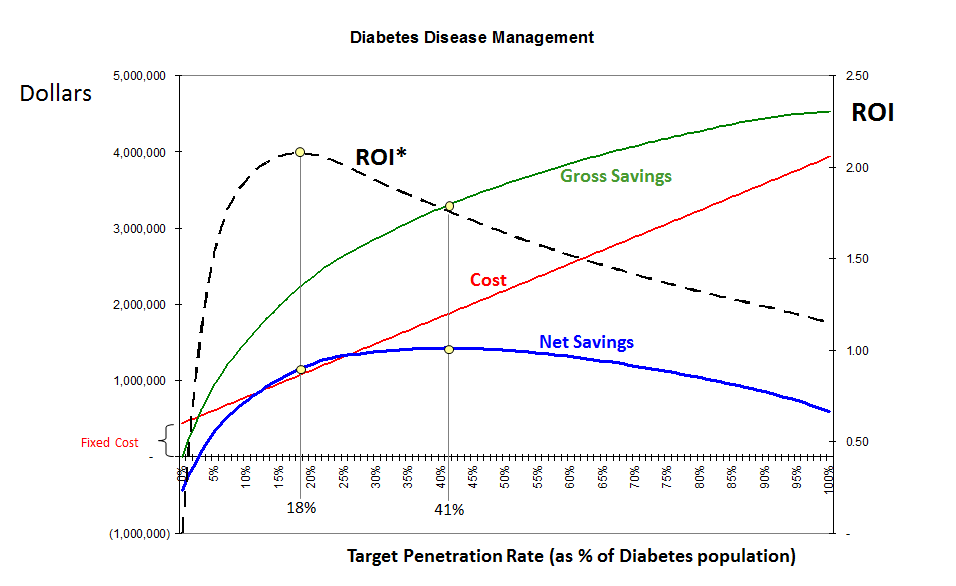
The debate about what to maximize when selecting candidates for care management programs: Accuracy? ROI? Net Savings? Or Cost-Effectiveness?

When doing analysis, it is really important to clarify up front what it is you are actually trying to figure out.  This sounds so obvious.  But, I am always amazed at how often sophisticated, eager analysts can zip past this important first step. Health plans, vendors and health care providers are all involved in the

The debate about what to maximize when selecting candidates for care management programs: Accuracy? ROI? Net Savings? Or Cost-Effectiveness? Read More »

Hospitalists have been focused on reducing hospital length of stay, but not so much on smooth transitions to ambulatory care

A new study published in the  Annals of Internal Medicine compared the economic outcomes of hospital episodes managed by hospitalists to those managed by the patients’ primary care physicians in a Medicare population. Previous studies focused only on the cost of the hospital stay itself, and showed that hospitalists were able to reduce length of stay

Hospitalists have been focused on reducing hospital length of stay, but not so much on smooth transitions to ambulatory care Read More »

Health Care Heroes: Wilmer Rutt, MD – Adapting the R&D Concept to Health Care Provider Organizations

This morning, I read the results from a clinical trial of ovarian cancer screening in JAMA.  The trial showed that ovarian cancer screening was not effective in saving lives.  I was interested in the article because I was one of the investigators in that trial, which began in the early 1990s.  Henry Ford Health System

Health Care Heroes: Wilmer Rutt, MD – Adapting the R&D Concept to Health Care Provider Organizations Read More »

Google engineering too slow? Facebook too invested in the wrong data model to adapt? Are you kidding me?

Few things in my work life are better than finding mind-blowing information from other industries and figuring out the implications for healthcare. I recently read a set of slides by Paul Adams, a user experience designer that worked at Google and Facebook.  Although Adams’ presentation had 224 slides, the main thesis was relatively simple and

Google engineering too slow? Facebook too invested in the wrong data model to adapt? Are you kidding me? Read More »

Identifying and Understanding Analysis Tricks: Regression Toward the Mean

Imagine that you are a new homeowner, shopping for insurance for your new house.  You live in an area prone to earthquakes, and you are not a big risk-taker.  You decide that you should have earthquake insurance.  You are on the web researching earthquake insurance policies. You come across the web site of Acme Insurance,

Identifying and Understanding Analysis Tricks: Regression Toward the Mean Read More »

How does behavioral economics and “gamification” relate to ACOs?

The transformation of our health care system requires many different people to change their behaviors. Leaders of health care organizations have to be willing to make investments that they have historically not been willing to make. Physicians have to change the way they relate to patients, the way they interact with their non-physician team members

How does behavioral economics and “gamification” relate to ACOs? Read More »

“Can I get a Fast Pass?”: Learning from Disney about health care quality

While returning from a vacation to Walt Disney World yesterday, my family and I were in a disorganized crowd at the Orlando International Airport boarding the tram that shuttles travelers between terminal buildings.  A man yelled “Can I get a fast pass?”  Everyone laughed. Anyone who has been to a Disney park knows that a

“Can I get a Fast Pass?”: Learning from Disney about health care quality Read More »

Atul Gawande’s articles in the New Yorker most relevant to ACOs

Atul Gawande is a general surgeon at Brigham and Women’s Hospital in Boston, and is an amazingly compelling writer about health care issues.  He has written a series of articles in the New Yorker, blending stories of individual patients and their care providers with a larger scientific and health policy context.  Some of the most relevant of

Atul Gawande’s articles in the New Yorker most relevant to ACOs Read More »

Why “case load” is not a good metric for case management productivity or intensity

As shown in the following graphic recently published by the Healthcare Intelligence Network, it has become common practice to use “case load” as a metric for the productivity of nurses in case management programs or as a measure of the intensity of a case management intervention.  More broadly, case load has been used for these

Why “case load” is not a good metric for case management productivity or intensity Read More »