Clinical Process Improvement

Clinical Process Improvement includes efforts to re-design, transform or incrementally improve decision-making and care-delivery processes within and across clinical settings so as to achieve measurable increases in quality, appropriateness and efficiency of care and patients’ satisfaction with that care.

Reference for Joint Principles of the Patient Centered Medical Home, 2007

Here is the original reference to the February, 2007, 3-page consensus document that describes the Joint Principles of the Patient Centered Medical Home.  It was created by the four professional societies that are focused on primary care: American Academy of Family Physicians (AAFP), American Academy of Pediatrics (AAP), American College of Physicians (ACP), and American Osteopathic Association (AOA). Very

Reference for Joint Principles of the Patient Centered Medical Home, 2007 Read More »

The Smoking Intervention Program, a Provider-based Care Management Process

Smoking cessation is an important public health concern, and has been the subject of a recent Agency for Health Care Policy and Research (AHCPR) guideline, as well as a HEDIS measure.   A point prevalence study conducted with the Henry Ford Health System found a 27.4% prevalence of smoking, and an additional 38.6% former smokers. The

The Smoking Intervention Program, a Provider-based Care Management Process Read More »

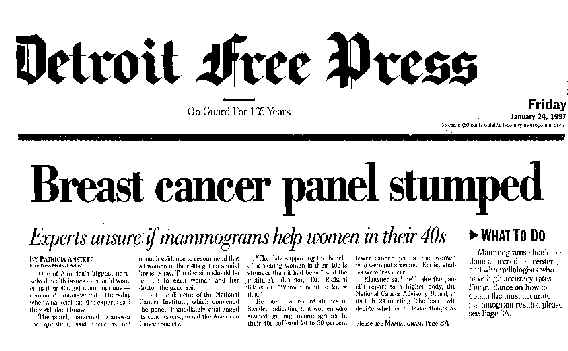
Using Eddy’s Explicit Method to Develop Practice Guidelines for Mammography in the 40-49 Age Group

Note that the following write-up is now almost 20 years old!  (How did that happen?)  Amazingly, the debate about the role and frequency of mammography in the 40-49 age group has raged on the entire time since then.  This case study demonstrates the real-world use of the “explicit method” proposed by one of my “health

Using Eddy’s Explicit Method to Develop Practice Guidelines for Mammography in the 40-49 Age Group Read More »

Improving Total Hip Replacement Surgery

Background Joint replacement is a costly and frequently performed inpatient procedure.  In 1995, Henry Ford Hospital carried out 280 total hip replacements and 225 total knee replacements.  To decrease unnecessary inpatient utilization and enhance functional outcomes of joint replacement surgery, Henry Ford Hospital established a multi-disciplinary improvement team, including representatives from Orthopedic Surgery, Physical Therapy,

Improving Total Hip Replacement Surgery Read More »

Improving Adult Flu Immunization

Background The US Preventive Services Task Force established national evidence-based guidelines for adult immunization as part of their 1993 and 1996 review processes. After a review by Henry Ford Health System (HFHS) general internists, family practitioners, and infectious disease specialists, these guidelines were endorsed by the HFHS Prevention Committee. The Prevention Committee’s recommendations were subsequently

Improving Adult Flu Immunization Read More »

Necessary Elements of Care Management & Clinical Process Improvement Initiatives

A number of core elements are key to ensure the success of any care management or clinical process improvement initiative. As illustrated in the figure below, these elements include: conducting a preliminary needs assessment or problem identification; establishing an appropriate improvement team; defining the target population; identifying measurable goals and objectives; articulating the desirable decision

Necessary Elements of Care Management & Clinical Process Improvement Initiatives Read More »

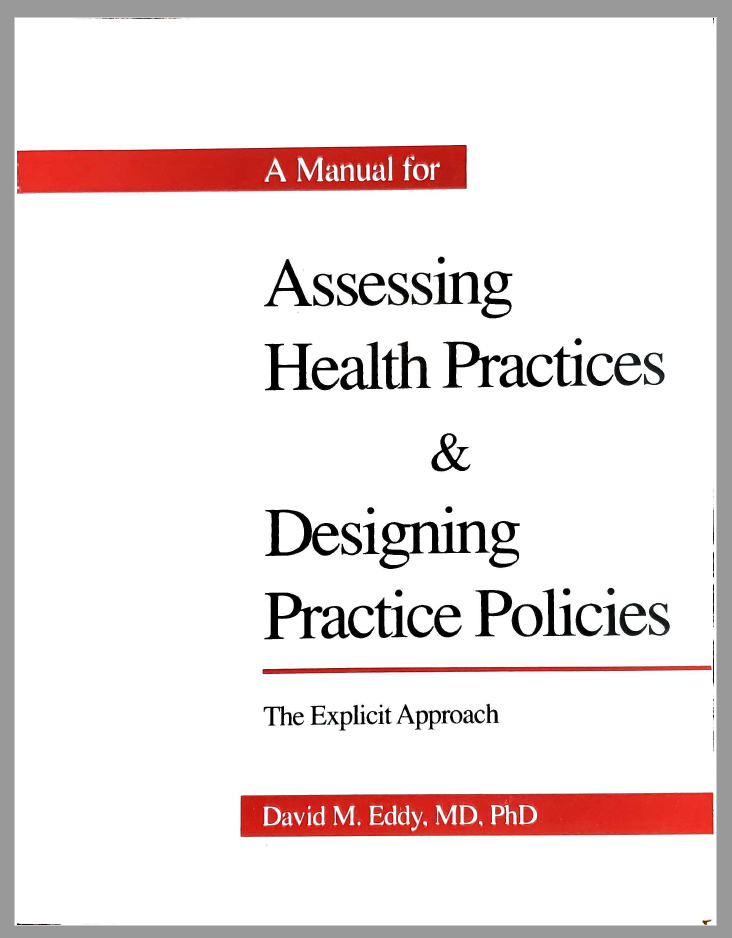
Establishing Best Practices (Practice Guidelines & Protocols)

Best practices, also known as “practice policies” are defined as “preformed recommendations issued for the purpose of influencing decisions about health interventions.”  The term best practice does not itself specify an intended degree of flexibility. Some best practices are intended to be “standards,” with little intended flexibility. Others are intended to serve as “guidelines,” and

Establishing Best Practices (Practice Guidelines & Protocols) Read More »

The Managed Care College and Pediatric Asthma Management

The Managed Care College The Managed Care College is a comprehensive professional development program that is intended to go beyond the transfer of information. It attempts to persuade clinicians that change is necessary and desirable, to provide leadership and guidance in seeking change, to create opportunities to collaborate with colleagues in planning and implementing change,

The Managed Care College and Pediatric Asthma Management Read More »

Implementation of Best Practices

The implementation of best practices to improve the quality and efficiency of health care involves making changes to both decision-making and care-delivery processes. The care management methods for improving these processes are largely borrowed from the work of Deming, Crosby, Juran, Ishikawa, and other practitioners of industrial process improvement. These methods are alternatively described as

Implementation of Best Practices Read More »

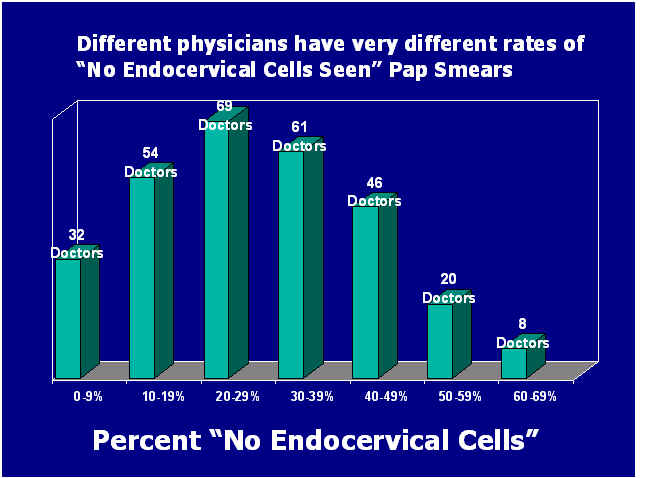
CQI Methods Used Improve the Quality of Cervical Cancer Screening

A baseline evaluation of “Pap” smears done in a large multi-specialty group practice revealed that over 25% of samples were designated “less than optimal” because of the absence of observed endocervical cells, an indicator of sample adequacy. In addition, there was a large variation in the rates of sample adequacy achieved by different physicians and

CQI Methods Used Improve the Quality of Cervical Cancer Screening Read More »