Clinical Process Improvement

Clinical Process Improvement includes efforts to re-design, transform or incrementally improve decision-making and care-delivery processes within and across clinical settings so as to achieve measurable increases in quality, appropriateness and efficiency of care and patients’ satisfaction with that care.

In response to a JAMA Viewpoint offering 4 principles for public health post COVID, I say yes, but we need a 5th principle – Science staying in its lane.

In a recent issue of JAMA, Daniel Morgan (U Maryland) and Deborah Korenstein (Icahn/Mt. Sinai) offered a viewpoint article that revisits the important evaluative conversation about the performance of our public health system during the COVID-19 pandemic and offers four useful principles for a “new approach to public health.” In this post, I will briefly

In response to a JAMA Viewpoint offering 4 principles for public health post COVID, I say yes, but we need a 5th principle – Science staying in its lane. Read More »

Time for a temporarily privatized CDC policymaking process, sponsored and funded by provider & payer organizations, professional societies and states.

Recent efforts by HHS Secretary Kennedy to politicize CDC policymaking leave us without the science-driven process the nation requires. Therefore, while we wait impatiently for the storm to pass, we will need a temporary arrangement where provider and payor organizations, professional societies and states cooperate to establish, fund and delegate some authority to a substitute

Time for a temporarily privatized CDC policymaking process, sponsored and funded by provider & payer organizations, professional societies and states. Read More »

Trump/Musk killed AHRQ, but in a sense, the death has been playing out over 25 years. Recalling 4 eras of the agency and my dream for its eventual rebirth.

Slashing and Dissolving As reported by the Kaiser Family Foundation’s Health News site blog, last week the Trump administration “dissolved” the Agency for Healthcare Research and Quality (AHRQ), the agency that has for decades been at the center of the US Federal Government’s support for health services research in the service of improvement of our

Trump/Musk killed AHRQ, but in a sense, the death has been playing out over 25 years. Recalling 4 eras of the agency and my dream for its eventual rebirth. Read More »

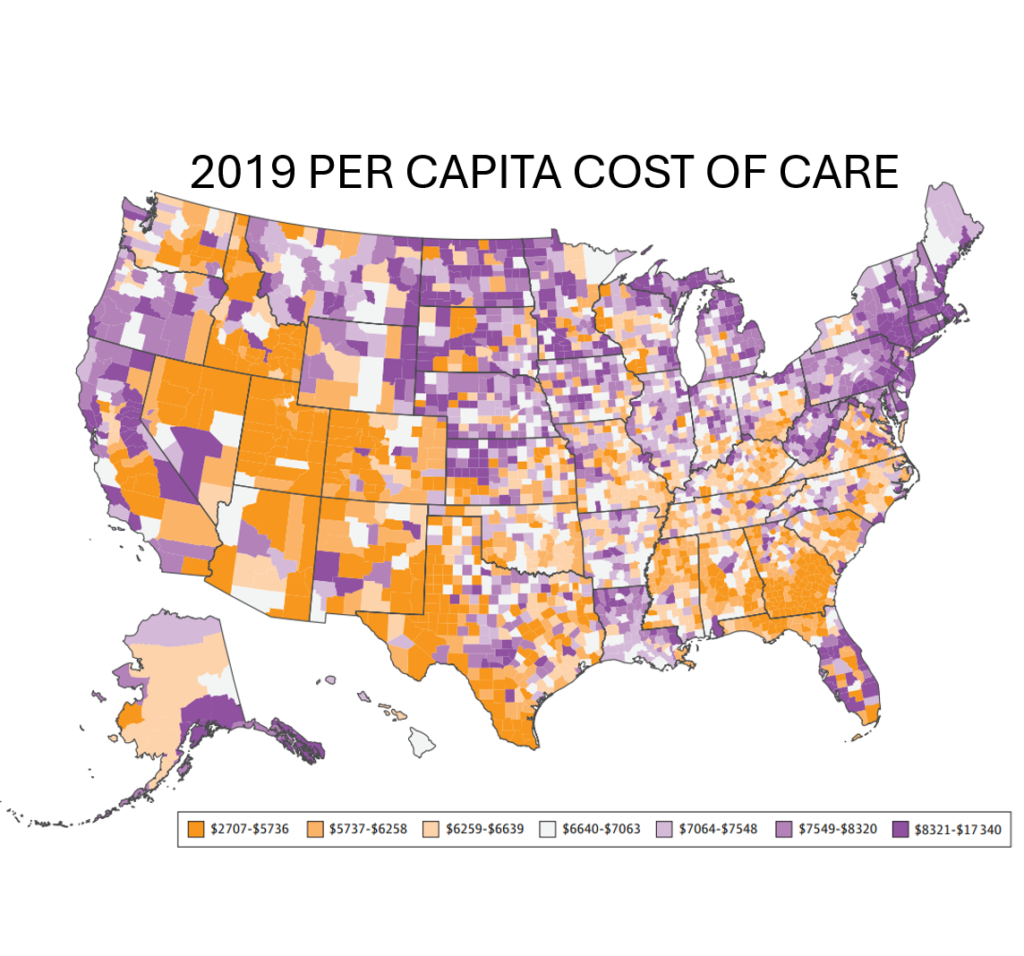
In the debate about price vs utilization as the main driver of geographic variation in cost of care, I say don’t get distracted from innovation.

I want to call your attention to a very thoughtful blog published by the semi-retired health care journalist, Merrill Goozner: the GoozNews Substack. Goozner’s most recent post, “It’s mostly overutilization, stupid” provides a delightful trip down memory lane, summarizing the decades-old debate about the causes of geographic variation in health care cost. Goozner started by

In the debate about price vs utilization as the main driver of geographic variation in cost of care, I say don’t get distracted from innovation. Read More »

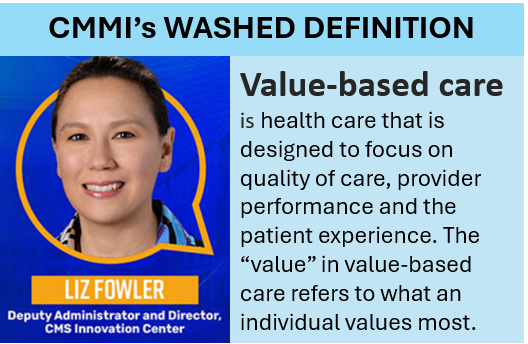
CMS Innovation Center engages in linguistic manipulation and health economics denialism in new definition of “VBC”

There are many good people at the CMS Innovation Center (CMMI). They mean well. They are our friends. But friends need to call out friends when they are out of line. I received an email this morning from CMS announcing the launch of their new “Value-Based Care Spotlight” website. Right near the top of the

CMS Innovation Center engages in linguistic manipulation and health economics denialism in new definition of “VBC” Read More »

Healthgrades page shown on iPad

What should we do when there is a clash between two noble goals: consumer transparency and quality improvement? Five proposed principles.

For many years, I’ve been following and writing blog posts about one of my heroes, Don Berwick, a physician leader, Obama-era CMS Administrator and one of most eloquent, persistent and effective advocates for quality improvement in health care. In a recent viewpoint article in JAMA, Dr. Berwick and two physician co-authors, Thom Meyer (from Duke)

What should we do when there is a clash between two noble goals: consumer transparency and quality improvement? Five proposed principles. Read More »

Berwick and Gilfillan offer six recommendations for reinventing CMMI. My response is yes, but they don’t address the #1 issue: failure to achieve critical mass.

In a recent health policy viewpoint article in JAMA, Drs. Don Berwick and Rick Gilfillan noted that, although the CMS Center for Medicare and Medicaid Innovation (CMMI) has done some good during its ten+ years of existence, it has failed to “become the engine that it could be for transforming the nation’s health care finance

Berwick and Gilfillan offer six recommendations for reinventing CMMI. My response is yes, but they don’t address the #1 issue: failure to achieve critical mass. Read More »

Defensible COVID-19 vaccine prioritization policy will require bravery and explicit principles and analytics. We offer example principles and propose a 6-step process.

For almost a year, the weary public has been receiving a confusing mix of information and misinformation and witnessing an inconsistent and sometimes incoherent policy-making process regarding COVID-19 pandemic response. Leaders, journalists, neighbors, and wanna-be-expert social media influencers have all offered opinions about closing schools and businesses, mandatory mask wearing, testing, quarantine directives and other

Defensible COVID-19 vaccine prioritization policy will require bravery and explicit principles and analytics. We offer example principles and propose a 6-step process. Read More »

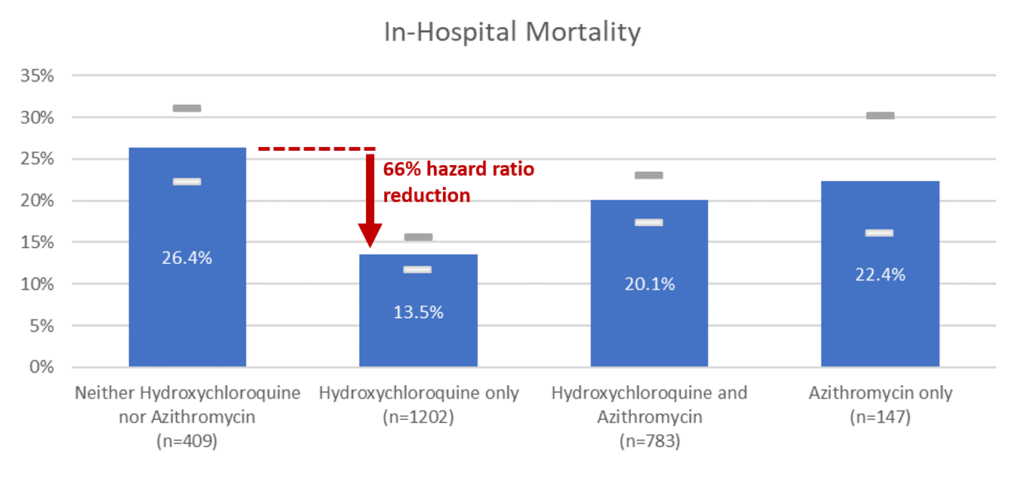
Henry Ford observational study that shows 66% in-hospital mortality reduction from hydroxychloroquine seems to be guilty of “heroic propensity score” problem

During the 1990s, I served as the director of the Center for Clinical Effectiveness at the Henry Ford Health System in Detroit.  I was lucky to have an opportunity to hang around with a really talented group of people there, some of whom are still there.  Back in the day, I was among the loudest

Henry Ford observational study that shows 66% in-hospital mortality reduction from hydroxychloroquine seems to be guilty of “heroic propensity score” problem Read More »