Clinical Process Improvement

Clinical Process Improvement includes efforts to re-design, transform or incrementally improve decision-making and care-delivery processes within and across clinical settings so as to achieve measurable increases in quality, appropriateness and efficiency of care and patients’ satisfaction with that care.

If repealing Obamacare is off the table, can we turn attention to improving it through cost-effective clinical protocols?

Paul Krugman recently wrote an article in the New York Times posing the question: if repealing Obamacare is off the table (for now), should people on the “progressive” end of the political spectrum push for a single-payer “Medicare for all” system or just advocate for incremental improvements to the privatized Obamacare model?  He says if

If repealing Obamacare is off the table, can we turn attention to improving it through cost-effective clinical protocols? Read More »

Hospital Value-based Purchasing program 1% incentive is like homeopathic medicine — too diluted to actually work

In the June 15, 2017 issue of the New England Journal of Medicine, Andrew Ryan and colleagues from the University of Michigan published an evaluation of the Medicare Hospital Value-Based Purchasing Program (HVBP). To summarize, if you offer a 1% incentive, and then dilute it by offering it only for the 40% of hospital patients

Hospital Value-based Purchasing program 1% incentive is like homeopathic medicine — too diluted to actually work Read More »

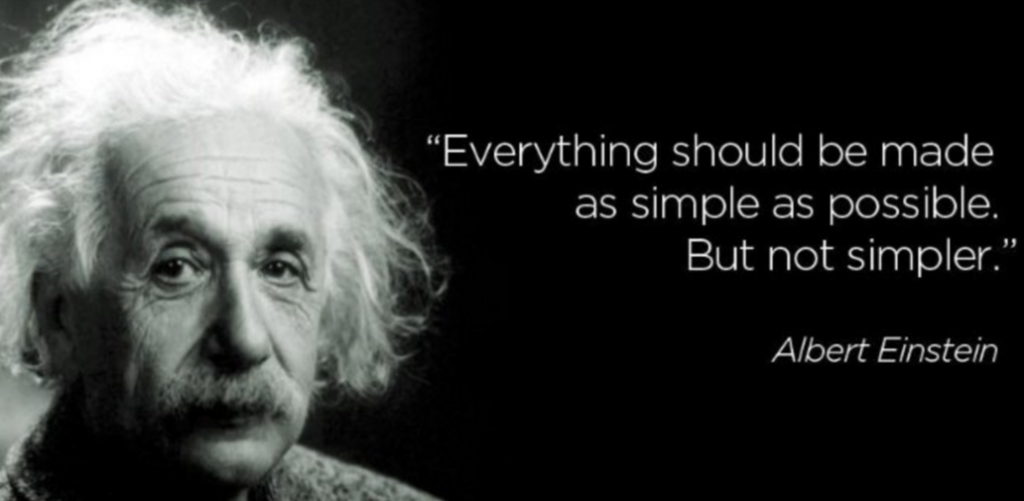
Three ways to keep it simple — one of which is bad

“Keep it simple, stupid.”   The “K.I.S.S.” principle.  Generally a good idea, but not always. Consider three types of simplification: Leaning.  This is about getting rid of waste. When simplifying a design, leaning involves getting rid of unnecessary features.  When simplifying communications, leaning involves getting rid of information that is duplicative, unimportant or just decorative.  Edward

Three ways to keep it simple — one of which is bad Read More »

First take on new CMS Comprehensive Primary Care Plus model

This morning, I read about the recently announced next generation version of the CMS Comprehensive Primary Care model, which will require multi-payer participation and will involve up to 5K practices in 20 regions. Sounds interesting.  I need to study it in more detail.  But based on my initial assessment: I agree with the idea of

First take on new CMS Comprehensive Primary Care Plus model Read More »

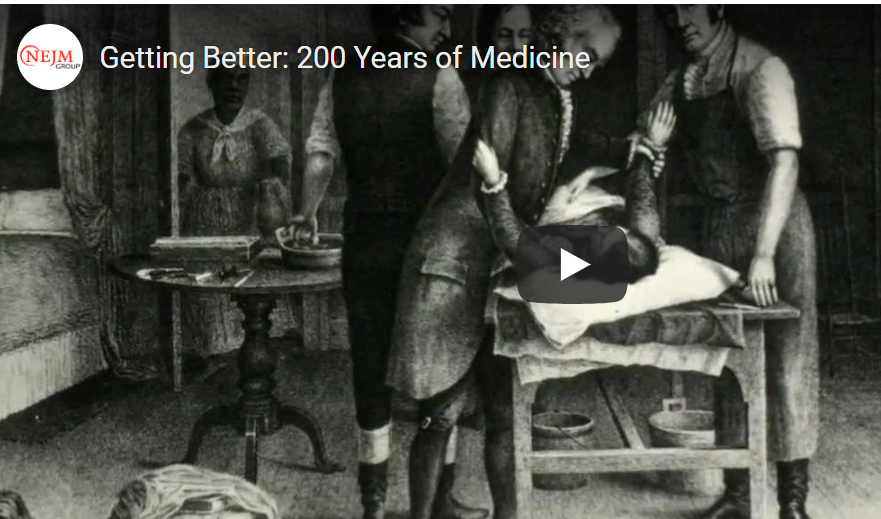
Looking back over the last 200 years, noticing progress to get energy to keep moving forward

I choose to be an optimist.  I can visualize a health care system that is better than the one we have. A system where we function as a coordinated team, learn from day-to-day care, enabled by analytic methods and information technology designed to make that happen. A system where we can measure improvement in patient

Looking back over the last 200 years, noticing progress to get energy to keep moving forward Read More »

Simon Sinek’s TED talk: Change minds by starting with why, not what

Improving health care requires convincing people to make changes. Changing a care process begins with changing the minds of the people involved in that process. But, how can we change people’s minds? I am a person who loves logic and numbers. Therefore, my tendency is to assume that the best way to convince people to

Simon Sinek’s TED talk: Change minds by starting with why, not what Read More »

Congressional Budget Office: Care management programs only work if care managers have face to face contact with patients and substantial interaction with physicians

This month, Lyle Nelson of the Congressional Budget Office (CBO) released a “working paper” summarizing the results of a decade of experience with 6 care management demonstration projects in the Medicare population.  These demonstrations included a total of 34 disease management or care coordination programs. All of the 34 care management programs were designed to reduce

Congressional Budget Office: Care management programs only work if care managers have face to face contact with patients and substantial interaction with physicians Read More »

The Humunculus is a metaphor for Clinical Process Improvement Frameworks

During the last 20 years, we have experienced wave after wave of new frameworks for improving health care.  Each had its own terminology, ardently promoted and enforced by its zealous advocates.  Each had a lifecycle that began with a long incubation period, followed by a period of explosive growth in popularity and influence, rapidly leading

The Humunculus is a metaphor for Clinical Process Improvement Frameworks Read More »

Health Care Heroes: Don Berwick, MD – Adapting industrial quality improvement principles to the improvement of health care processes

Last week, Don Berwick, MD, announced his resignation as Administrator of the Centers for Medicare and Medicaid Services (CMS).  Now is a good time to explain why Dr. Berwick is one of my all time health care heroes. Apparently, I talk about Dr. Berwick a lot. A few years ago, I received one of my

Health Care Heroes: Don Berwick, MD – Adapting industrial quality improvement principles to the improvement of health care processes Read More »