Cost-Effectiveness Analysis (CEA)

Cost-Effectiveness Analysis (CEA) is a method for comparing alternative clinical interventions taking into account not only the health outcomes experienced by the patient but also the health care costs that are borne by the health plan, Accountable Care Organization, or society. This is generally accomplished by creating a single utility measure encompassing all incremental patient health outcomes (such as a Quality-Adjusted Life Year) and comparing that in a ratio to the incremental cost, and then comparing the ratio to some threshold that reflects the values of the policy-makers or the constituents they represent.

In response to a JAMA Viewpoint offering 4 principles for public health post COVID, I say yes, but we need a 5th principle – Science staying in its lane.

In a recent issue of JAMA, Daniel Morgan (U Maryland) and Deborah Korenstein (Icahn/Mt. Sinai) offered a viewpoint article that revisits the important evaluative conversation about the performance of our public health system during the COVID-19 pandemic and offers four useful principles for a “new approach to public health.” In this post, I will briefly

In response to a JAMA Viewpoint offering 4 principles for public health post COVID, I say yes, but we need a 5th principle – Science staying in its lane. Read More »

Trump/Musk killed AHRQ, but in a sense, the death has been playing out over 25 years. Recalling 4 eras of the agency and my dream for its eventual rebirth.

Slashing and Dissolving As reported by the Kaiser Family Foundation’s Health News site blog, last week the Trump administration “dissolved” the Agency for Healthcare Research and Quality (AHRQ), the agency that has for decades been at the center of the US Federal Government’s support for health services research in the service of improvement of our

Trump/Musk killed AHRQ, but in a sense, the death has been playing out over 25 years. Recalling 4 eras of the agency and my dream for its eventual rebirth. Read More »

Defensible COVID-19 vaccine prioritization policy will require bravery and explicit principles and analytics. We offer example principles and propose a 6-step process.

For almost a year, the weary public has been receiving a confusing mix of information and misinformation and witnessing an inconsistent and sometimes incoherent policy-making process regarding COVID-19 pandemic response. Leaders, journalists, neighbors, and wanna-be-expert social media influencers have all offered opinions about closing schools and businesses, mandatory mask wearing, testing, quarantine directives and other

Defensible COVID-19 vaccine prioritization policy will require bravery and explicit principles and analytics. We offer example principles and propose a 6-step process. Read More »

If repealing Obamacare is off the table, can we turn attention to improving it through cost-effective clinical protocols?

Paul Krugman recently wrote an article in the New York Times posing the question: if repealing Obamacare is off the table (for now), should people on the “progressive” end of the political spectrum push for a single-payer “Medicare for all” system or just advocate for incremental improvements to the privatized Obamacare model?  He says if

If repealing Obamacare is off the table, can we turn attention to improving it through cost-effective clinical protocols? Read More »

New HIT ROI lit review is a methodologic tour de force, but misses the point

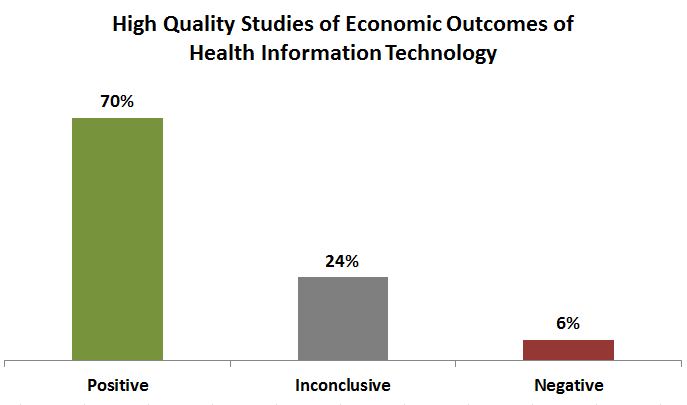
Recently, Jesdeep Bassi and Francis Lau of the University of Victoria (British Columbia) published in the Journal of the American Medical Informatics Association (JAMIA) another in a series of review articles that have been written in recent years to summarize the literature regarding the economic outcomes of investments in health information technology (HIT).  Such articles answer

New HIT ROI lit review is a methodologic tour de force, but misses the point Read More »

Conceptualizing “over-treatment” waste: Don’t deny health economics

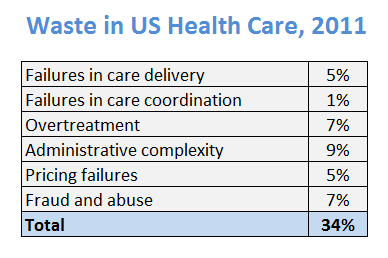
A Health Policy Brief published in Health Affairs on December 13, 2012 referenced an analysis published last April in JAMA regarding waste in health care.  In this analysis, Don Berwick (one of my health care heroes) and Andrew Hackbarth (from RAND) estimated that waste in health care consumed between $476 billion and $992 billion of

Conceptualizing “over-treatment” waste: Don’t deny health economics Read More »

The debate about what to maximize when selecting candidates for care management programs: Accuracy? ROI? Net Savings? Or Cost-Effectiveness?

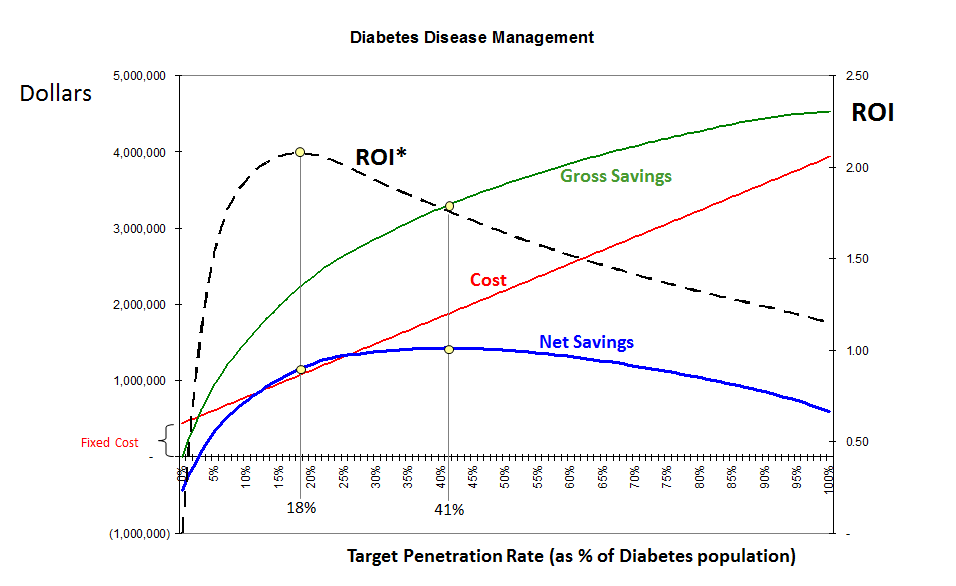
When doing analysis, it is really important to clarify up front what it is you are actually trying to figure out.  This sounds so obvious.  But, I am always amazed at how often sophisticated, eager analysts can zip past this important first step. Health plans, vendors and health care providers are all involved in the

The debate about what to maximize when selecting candidates for care management programs: Accuracy? ROI? Net Savings? Or Cost-Effectiveness? Read More »

Reports of the death of Cost-Effectiveness Analysis in the U.S. may have been exaggerated: The ongoing case of Mammography

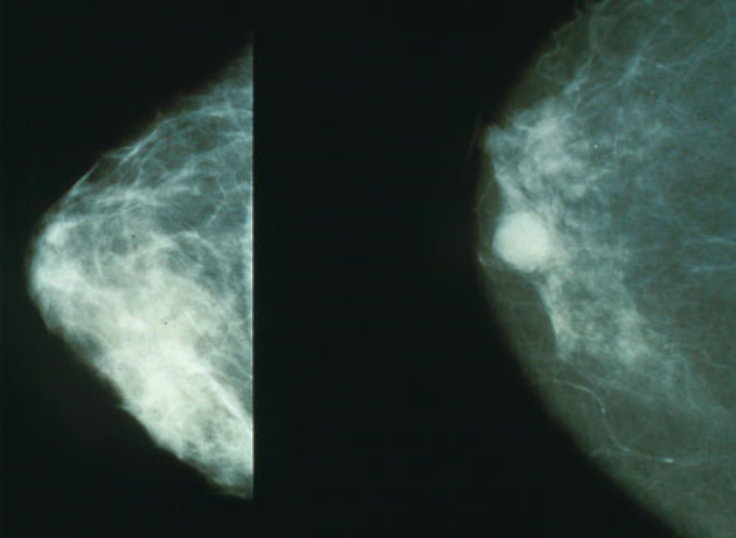
Guidelines for the use of mammograms to screen for breast cancer have been the topic of one of the fiercest and longest-running debates in medicine.  Back in the early 1990s, I participated in that debate as the leader of a guideline development team at the Henry Ford Health System.  We developed one of the earliest

Reports of the death of Cost-Effectiveness Analysis in the U.S. may have been exaggerated: The ongoing case of Mammography Read More »

Why do other countries have different attitudes about Health Economics?

Wednesday morning, I attended a thought-provoking panel discussion entitled “Is Health Economics an Un-American Activity?” — a reference to the McCarthy-era Congressional committees that judged Hollywood movie directors and others considered to be communist sympathizers.  The panel presentation was part of the annual meeting of the International Society for Pharmacoeconomics and Outcomes Research (ISPOR) in

Why do other countries have different attitudes about Health Economics? Read More »