Cost-Effectiveness Analysis (CEA)

Cost-Effectiveness Analysis (CEA) is a method for comparing alternative clinical interventions taking into account not only the health outcomes experienced by the patient but also the health care costs that are borne by the health plan, Accountable Care Organization, or society. This is generally accomplished by creating a single utility measure encompassing all incremental patient health outcomes (such as a Quality-Adjusted Life Year) and comparing that in a ratio to the incremental cost, and then comparing the ratio to some threshold that reflects the values of the policy-makers or the constituents they represent.

NEJM report of ACO financial model fails to include risk of delayed start on transformation

On March 23, 2011, Trent Haywood, MD, JD, and Keith Kosel, PhD, MBA published the results in the New England Journal of Medicine (NEJM) web site of a financial model of a hypothetical Accountable Care Organization (ACO).  This model shows that ACOs are likely to lose money on the Medicare Shared Savings Program called for in

NEJM report of ACO financial model fails to include risk of delayed start on transformation Read More »

The Smoking Intervention Program, a Provider-based Care Management Process

Smoking cessation is an important public health concern, and has been the subject of a recent Agency for Health Care Policy and Research (AHCPR) guideline, as well as a HEDIS measure.   A point prevalence study conducted with the Henry Ford Health System found a 27.4% prevalence of smoking, and an additional 38.6% former smokers. The

The Smoking Intervention Program, a Provider-based Care Management Process Read More »

Using Eddy’s Explicit Method to Develop Practice Guidelines for Mammography in the 40-49 Age Group

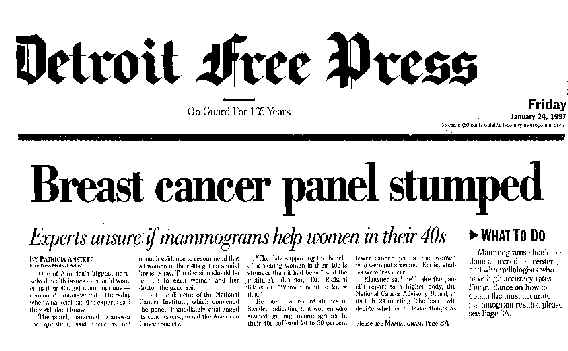
Note that the following write-up is now almost 20 years old!  (How did that happen?)  Amazingly, the debate about the role and frequency of mammography in the 40-49 age group has raged on the entire time since then.  This case study demonstrates the real-world use of the “explicit method” proposed by one of my “health

Using Eddy’s Explicit Method to Develop Practice Guidelines for Mammography in the 40-49 Age Group Read More »

CQI Methods Used Improve the Quality of Cervical Cancer Screening

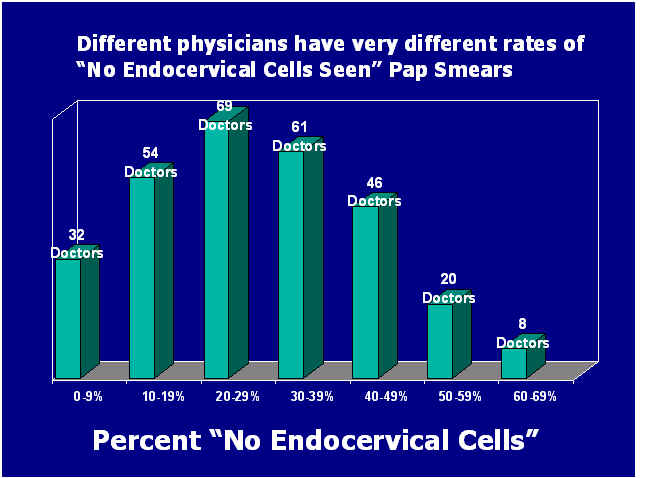
A baseline evaluation of “Pap” smears done in a large multi-specialty group practice revealed that over 25% of samples were designated “less than optimal” because of the absence of observed endocervical cells, an indicator of sample adequacy. In addition, there was a large variation in the rates of sample adequacy achieved by different physicians and

CQI Methods Used Improve the Quality of Cervical Cancer Screening Read More »