JAMA

In response to a JAMA Viewpoint offering 4 principles for public health post COVID, I say yes, but we need a 5th principle – Science staying in its lane.

In a recent issue of JAMA, Daniel Morgan (U Maryland) and Deborah Korenstein (Icahn/Mt. Sinai) offered a viewpoint article that revisits the important evaluative conversation about the performance of our public health system during the COVID-19 pandemic and offers four useful principles for a “new approach to public health.” In this post, I will briefly
In response to a JAMA Viewpoint offering 4 principles for public health post COVID, I say yes, but we need a 5th principle – Science staying in its lane. Read More »

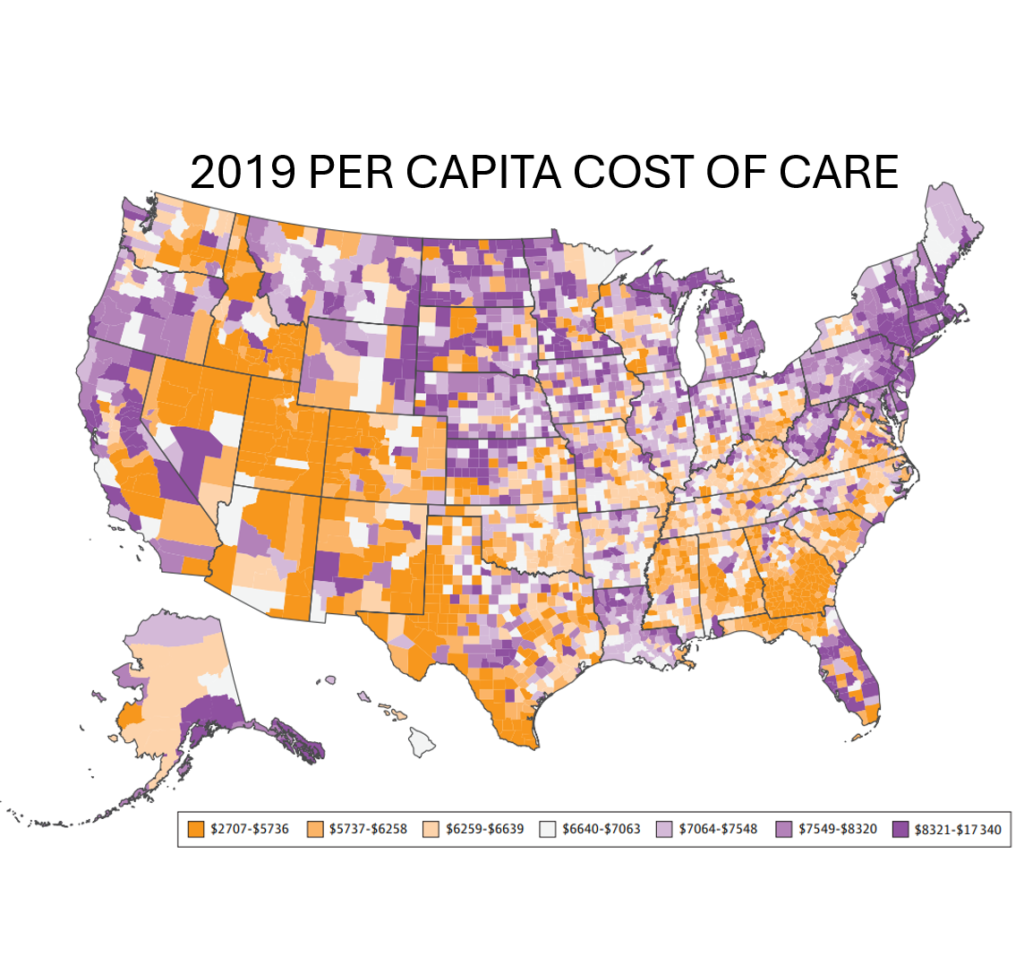
In the debate about price vs utilization as the main driver of geographic variation in cost of care, I say don’t get distracted from innovation.

I want to call your attention to a very thoughtful blog published by the semi-retired health care journalist, Merrill Goozner: the GoozNews Substack. Goozner’s most recent post, “It’s mostly overutilization, stupid” provides a delightful trip down memory lane, summarizing the decades-old debate about the causes of geographic variation in health care cost. Goozner started by

In the debate about price vs utilization as the main driver of geographic variation in cost of care, I say don’t get distracted from innovation. Read More »

Graph 2018 Total Low Value Services in MA compared to Traditional Medicare by Plan

Anthem and other Blue MA Plans are worse than traditional Medicare in use of Low Value Services

In the November 1, 2024 issue of JAMA, Ciara Duggan and others from Harvard and Brigham published a paper evaluating the utilization of “low value services” across major Medicare Advantage insurers and Traditional Medicare. Low value services utilization was defined based on the Choosing Wisely campaign and the US Preventive Task Force, and incorporated in

Anthem and other Blue MA Plans are worse than traditional Medicare in use of Low Value Services Read More »

Picture of studying for a test

Physicians want fewer quality measures, but more might be better if it motivates core process improvement rather than “studying for the test”

A JAMA study reports that PCPs are contractually held accountable for 57 unique quality metrics and asserts that is “oversaturation.” I have disagreed with the premise that we need fewer measures. On the contrary, I believe that we actually need a lot more measures to finally convince health care provider organizations to stop trying to “study for the test” and to actually learn the subject and improve the core processes that drive health care quality.

Physicians want fewer quality measures, but more might be better if it motivates core process improvement rather than “studying for the test” Read More »

The squeezing-the-balloon fallacy: Why savings from site-of-care shifts are wildly overestimated

The seemingly straightforward “grocery store” approach to calculating savings from health plans’ site of care shifting initiatives fails to account for fixed costs, a type of “squeeze the balloon” fallacy that leads to wildly exaggerated savings.

The squeezing-the-balloon fallacy: Why savings from site-of-care shifts are wildly overestimated Read More »

Healthgrades page shown on iPad

What should we do when there is a clash between two noble goals: consumer transparency and quality improvement? Five proposed principles.

For many years, I’ve been following and writing blog posts about one of my heroes, Don Berwick, a physician leader, Obama-era CMS Administrator and one of most eloquent, persistent and effective advocates for quality improvement in health care. In a recent viewpoint article in JAMA, Dr. Berwick and two physician co-authors, Thom Meyer (from Duke)

What should we do when there is a clash between two noble goals: consumer transparency and quality improvement? Five proposed principles. Read More »

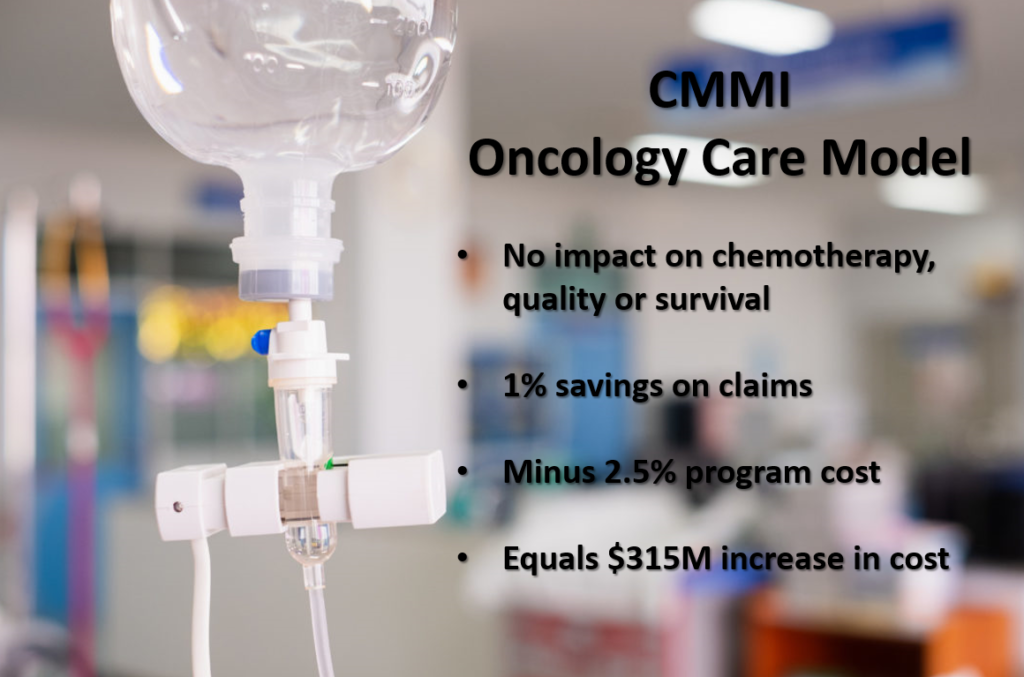
Oncology Care Model failure calls for rethinking our approach to real, sustainable improvement in specialty care

This month, disappointing evaluation results call for re-thinking of our approach to improving specialty care.  Nancy Keating and 12 of her colleagues from multiple medical schools and consultancies working with the CMS Center for Medicare and Medicaid Innovation (CMMI) published the results of their formal evaluation of the Oncology Care Model (OCM), a three-year large-scale

Oncology Care Model failure calls for rethinking our approach to real, sustainable improvement in specialty care Read More »