Dr. Ward

Richard E. Ward, MD, MBA, CEO of Reward Health. Also physician, health care analytics and informatics innovator, husband, father, tenor & gradually improving swimmer

Health Care Heroes: Don Berwick, MD – Adapting industrial quality improvement principles to the improvement of health care processes

Last week, Don Berwick, MD, announced his resignation as Administrator of the Centers for Medicare and Medicaid Services (CMS).  Now is a good time to explain why Dr. Berwick is one of my all time health care heroes. Apparently, I talk about Dr. Berwick a lot. A few years ago, I received one of my

Health Care Heroes: Don Berwick, MD – Adapting industrial quality improvement principles to the improvement of health care processes Read More »

AHRQ guidance: Forget about proving Medical Home effectiveness with small pilot studies attempting to measure all-patient cost savings

The vast majority of already-published and currently-underway studies of the effectiveness of the Patient Centered Medical Home (PCMH) model of care are pilot studies with fewer than 50 PCMH practices.  Most of these studies report or intend to report reductions in hospitalization rates and savings across the entire population of patients served by the PCMH

AHRQ guidance: Forget about proving Medical Home effectiveness with small pilot studies attempting to measure all-patient cost savings Read More »

Telling a 46 year health care cost growth story in one graph

In a recent post to the Health Affairs Blog, Charles Roehrig, an economist who serves as VP and director of Altarum’s Center for Sustainable Health Spending, presented some very interesting graphics of long term health care cost growth in the U.S.  He shows the often-presented statistic of health care cost as a percent of Gross

Telling a 46 year health care cost growth story in one graph Read More »

Primary care physicians acknowledge over-utilization and blame it on the lawyers.

Catching up on some reading, I came across this article in Medical News Today, describing the results of survey research conducted by Brenda E. Sirovich, MD, MS, and colleagues from the VA Outcomes Group (White River Junction, Vermont), and the Dartmouth Institute for Health Policy and Clinical Practice.   They surveyed primary care physicians and

Primary care physicians acknowledge over-utilization and blame it on the lawyers. Read More »

So, is there any good use of O/E analysis? Yes. It’s called Benchmark Opportunity Analysis.

In last week’s post, I argued that observed over expected analysis (O/E) was commonly misused as a method for doing “level playing field” performance comparisons.  I recommend against using it for that purpose. But, is there some other good use for O/E analysis? I can’t think of a good use for the O/E ratio itself

So, is there any good use of O/E analysis? Yes. It’s called Benchmark Opportunity Analysis. Read More »

HHS Releases Final ACO Rule

The Department of Health & Human Services (HHS) today released the final rule for accountable care organizations (ACO). The new rule includes a number of changes designed to make the Medicare Shared Savings Program more palatable for health care providers who had a largely negative response to the draft rule released last March. The changes include the

HHS Releases Final ACO Rule Read More »

Observed over expected (O/E) analysis is commonly misapplied to performance comparisons. Please don’t.

A few years ago, I had a shocking and enlightening discussion about analytic methods with a group of epidemiologists and biostatisticians from Blue Cross Blue Shield of Michigan. We were sitting around a table at a conference center in Lansing, where we were debriefing from a meeting of the Physician Group Incentive Program. We were

Observed over expected (O/E) analysis is commonly misapplied to performance comparisons. Please don’t. Read More »

2 min video of Harold Miller saying hospitals need to be offered a “glide path” to handle revenue reduction anticipated from new payment models

In this 2 minute video, Harold Miller, Executive Director, Center for Healthcare Quality & Payment Reform,talks about the changes that hospitals will face during the transition to new payment models. His remarks were part of the Massachusetts Medical Society’s program, “A Path to Accountable Care Organizations: How Do We Get There From Here?”, held on

2 min video of Harold Miller saying hospitals need to be offered a “glide path” to handle revenue reduction anticipated from new payment models Read More »

How do we reduce errors in software and data analysis? Culture of Accountability vs. Culture of Learning

A young colleague recently wrote to me complaining of frustration from having to deal with a high rate of errors in software development and data analysis.  Any time you are innovating in a knowledge-intensive field such as health care, you will need to develop new software and analyze data in new ways.  Errors will inevitably

How do we reduce errors in software and data analysis? Culture of Accountability vs. Culture of Learning Read More »

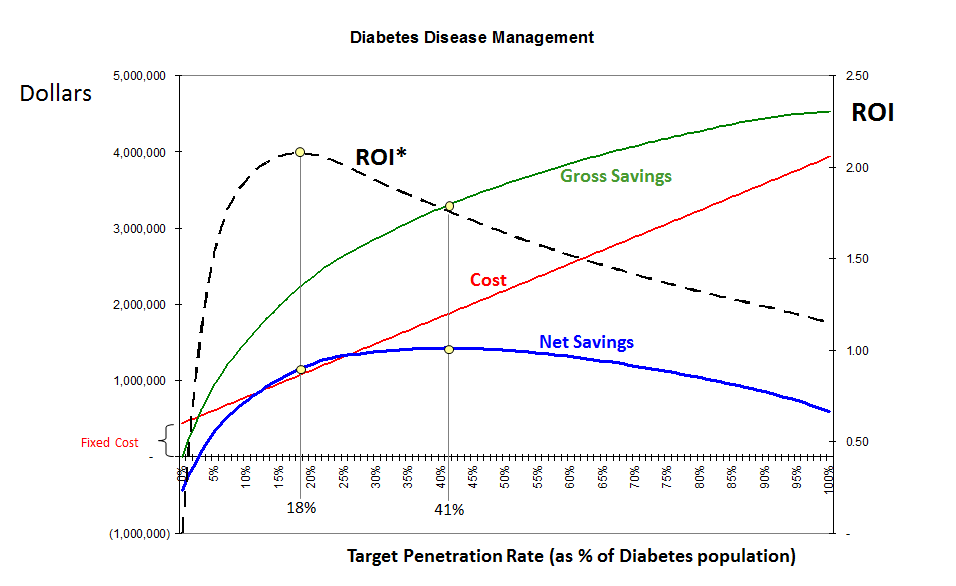
The debate about what to maximize when selecting candidates for care management programs: Accuracy? ROI? Net Savings? Or Cost-Effectiveness?

When doing analysis, it is really important to clarify up front what it is you are actually trying to figure out.  This sounds so obvious.  But, I am always amazed at how often sophisticated, eager analysts can zip past this important first step. Health plans, vendors and health care providers are all involved in the

The debate about what to maximize when selecting candidates for care management programs: Accuracy? ROI? Net Savings? Or Cost-Effectiveness? Read More »